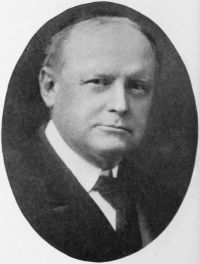
John Punnett Peters

John Punnett Peters

Summary

Portrait of John Punnett Peters John Punnett Peters 1911 Encyclopædia Britannica (1910)

During the rest of the year a large part of the country is a parched and barren desert, and much of the remainder swamps and lagoons. Wherever there is any pretence at irrigation, along the banks of the two great rivers and by the few canals which are still in existence, the yield is enormous, and the shores of the Tigris and Euphrates in the neighbourhood of Bagdad and Hilla seem to be one great palm garden.
Source: Wikisource

Portrait of John Punnett Peters John Punnett Peters 1911 Encyclopædia Britannica (1910)

The natives all carry somewhere on their face, neck, hands, arms or feet the scars of these boils which they have had as children. European children born in the country are apt to be seriously disfigured, as in their case the boils almost invariably appear on the face, and whereas native children have as a rule but one boil, those born of European parents will have several. Adult foreigners visiting the country are also liable to be attacked, and women, especially, rarely escape disfigurement if they stay in the country for any length of time.
Source: Wikisource

Portrait of John Punnett Peters John Punnett Peters 1911 Encyclopædia Britannica (1910)

There are four great centres of pilgrimage for Shiʽite Moslems in the vilayet, Samarra, Kazemain, a suburb of Bagdad, Kerbela and Nejef. These are visited annually by tens of thousands of pilgrims, not only from the surrounding regions, but also from Persia and India; many of whom bring their dead to be buried in the neighbourhood of the sacred tombs.
Source: Wikisource

Get perspective with Kwize: daily news enlightened by great literature