Summary

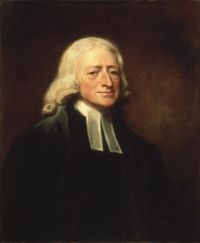
Portrait of John Wesley John Wesley A Plain Account of Christian Perfection… (1872)

Ought we not rather to grieve, to be deeply concerned, to let our eyes run down with tears? Here is one who seemed to be a living proof of God's power to save to the uttermost; but, alas, it is not as we hoped. He is weighed ill the balance, and found wanting! And is this matter of joy? Ought we not to rejoice a thousand times more, if we can find nothing but pure love?
"'But he is deceived.' What then? It is a harmless mistake, while he feels nothing but love in his heart. It is a mistake which generally argues great grace, an high degree both of holiness and happiness.
Source: Wikisource

Portrait of John Wesley John Wesley A Plain Account of Christian Perfection… (1872)

Nay, the mind itself may be deeply distressed, may be exceeding sorrowful, may be perplexed and pressed down by heaviness and anguish, even to agony, while the heart cleaves to God by perfect love, and the will is wholly resigned to him. Was it not so with the Son of God himself? Does any child of man endure the distress, the anguish, the agony, which he sustained? And yet he knew no sin.
Source: Wikisource

Portrait of John Wesley John Wesley A Plain Account of Christian Perfection… (1872)

A. By silence, he might avoid many crosses, which will naturally and necessarily ensue, if he simply declare, even among believers, what God has wrought in his soul. If, there- fore, such a one were to confer with flesh and blood he would be entirely silent. But this could not be done with a clear conscience; for undoubtedly he ought to speak. Men do not light a candle to put it under a bushel; much less does the all-wise God. He does not raise such a monument of his power and love, to hide it from all mankind.
Source: Wikisource

Get perspective with Kwize: daily news enlightened by great literature