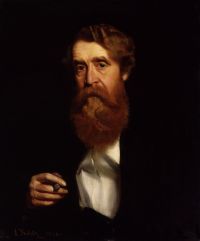
 Joseph Archer Crowe,
1911 Encyclopædia Britannica, Volume 13…
(1911)
Joseph Archer Crowe,
1911 Encyclopædia Britannica, Volume 13…
(1911)
“ One mill gives him repeated opportunities of charming our eye; and this wonderful artist, who is only second to Ruysdael because he had not Ruysdael’s versatility and did not extend his study equally to downs and rocky eminences, or torrents and estuaries—this is the man who lived penuriously, died poor, and left no trace in the artistic annals of his country! It has been said that Hobbema did not paint his own figures, but transferred that duty to Adrian van de Velde, Lingelbach, Barendt Gael, and Abraham Storck. ”
