Summary

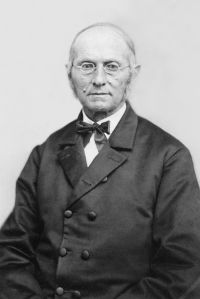
Portrait of Joseph Bates Joseph Bates The Seventh Day Sabbath, a Perpetual Sign

Now how evident it is that the Jewish nation did not destroy nor abolish this Covenant by breaking it. As well may it be said that the man who violates the law of his country has abolished or destroyed the whole law. No, no! men can no more destroy the law God has made than they can put out the light of the sun. They can destroy themselves, but God's work can they never. Hear God speak and may his word annihilate every thought to the contrary: "The Lord thy God he is the faithful God, which keepeth Covenant and mercy with them that love him and keep his commandments to a thousand generations."
Source: Gutenberg

Portrait of Joseph Bates Joseph Bates The Seventh Day Sabbath, a Perpetual Sign

If the seventh day Sabbath is included in the 17th verse, then it must be a shadow; if it is not a shadow, then Paul has no reference to it, and it stands forever! Moses says the ten commandments were written by the finger of God on tables of stone; whatever God has done with his own hand is stamped with immortality, and is as enduring as the sun, moon and stars.
Source: Gutenberg

Portrait of Joseph Bates Joseph Bates The Seventh Day Sabbath, a Perpetual Sign

I say, therefore, if there has been any change one way or the other in the Sabbath, since that promise, it would be impossible to understand any other promise in the Bible; how much more reasonable to believe God than man. If men will allow themselves to believe the monstrous absurdity that forever, as in this promise, ended at the resurrection, then they can easily believe that the Sabbath was changed from the seventh to the first day of the week. Or if they choose the other extreme, abolished until the people of God should awake to be clothed on with immortality.
Source: Gutenberg

Get perspective with Kwize: daily news enlightened by great literature