Summary

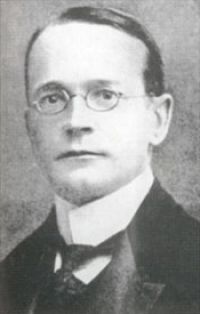
Portrait of Joseph McCabe Joseph McCabe The Story of Evolution — Chapter VIII. The Coal-Forest

Imagine these forests spread from Spitzbergen to Australia and even, according to the south polar expeditions, to the Antarctic, and from the United States to Europe, to Siberia, and to China, and prolonged during some hundreds of thousands of years, and you begin to realise that the Carboniferous period prepared the land for the coming dynasties of animals. Let some vast and terrible devastation fall upon this luxuriant world, entombing the great multitude of its imperfect forms and selecting the higher types for freer life, and the earth will pass into a new age.
Source: Wikisource

Portrait of Joseph McCabe Joseph McCabe The Story of Evolution — Chapter VIII. The Coal-Forest

We have first, therefore, to consider the evolution of the plant, and see how it increases in form and number until it covers the earth with the luxuriant forests of the Carboniferous period.
The plant world, we saw, starts, like the animal world, with a great kingdom of one-celled microscopic representatives, and the same principles of development, to a great extent, shape it into a large variety of forms. Armour-plating has a widespread influence among them.
Source: Wikisource

Portrait of Joseph McCabe Joseph McCabe The Story of Evolution — Chapter VIII. The Coal-Forest

Let me introduce the subject with a particular instance of evolution, the flat-fish. This animal has been fitted to survive the terrible struggle in the seas by acquiring such a form that it can lie almost unseen upon the floor of the ocean. The eye on the under side of the body would thus be useless, but a glance at a sole or plaice in a fishmonger's shop will show that this eye has worked upward to the top of the head. Was the eye shifted by the effort and straining of the fish, inherited and increased slightly in each generation?
Source: Wikisource

Get perspective with Kwize: daily news enlightened by great literature