Summary

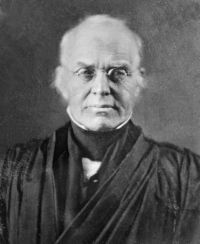
Portrait of Joseph Story Joseph Story Bank of the United States v. White…

There is no reason why a cause, at the rules, upon rule for answer, should be distinguished from a decree pro confesso, for non appearance. The object of serving on the respondent himself, a decree nisi, is, that the court may be assured he is wilfully in default. This is alike indispensable, in every case, where a decree pro confesso is to be taken. The supreme court will not readily control the circuit court in deciding any matter respecting its own practice.
Source: Wikisource

Portrait of Joseph Story Joseph Story Bank of the United States v. White…

Why may not a party rest his case upon a demurrer? He knows the facts are correctly stated in the bill. He finds the law arising from those facts against him: upon what principle of law or justice is a party so circumstanced obliged to pay the expense of a copy and service of such a decree?
Mr Sergeant, also, for the appellants, after presenting to the court the printed arguments of Mr Fox and Mr Caswell, stated that the whole case turned upon the rules for the regulation of equity proceedings in the circuit courts, as established by this court.
Source: Wikisource

Portrait of Joseph Story Joseph Story Bank of the United States v. White…

Consequently they could not, properly, be complainants in a bill of review. As it respected them, there was nothing to be reviewed.
The second error alleged is, that the appellees having appeared and demurred, although their demurrer was overruled, and the cause remanded to the rules for further proceeding, service of a decree nisi was not necessary.
The supreme court of the United States have established rules of practice touching this point. The circuit courts may not give them, every where, exactly the same construction; but may blend with them, in that construction, an existing practice.
Source: Wikisource

Get perspective with Kwize: daily news enlightened by great literature