Summary

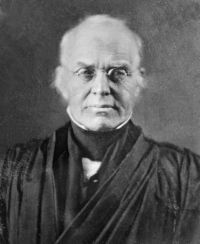
Portrait of Joseph Story Joseph Story Brown v. M'Gran/Opinion of the Court…

Now, this language, certainly, ordinarily imports only a desire, and not an order; and yet there can be no reasonable doubt, that under particular circumstances a wish expressed by a consignor to a factor may amount to a positive command. So, in the reply of the 24th of May, the defendants say, 'your wishes in respect to the cotton we now hold on your account, are noted accordingly.'
Here again the point is open, whether the language imports that the defendants construed the wishes of the plaintiff to be simply a strong expression of desire or opinion, or a positive order
Source: Wikisource

Portrait of Joseph Story Joseph Story Brown v. M'Gran/Opinion of the Court…

At the time when the shipment was made, and the advance arranged therefor, no instructions were given by M'Gran, touching the sale of the cotton. It accordingly went to the consignees, as factors for sale, the advances having been as above mentioned without any other contract than that implied by law as between a principal and a factor, making advances; that is to say, that the factor is to make sale of the goods, consigned to him, according to his own judgment, in the exercise of a sound discretion as to the time and mode of sale, having regard to the usages of trade at the place of sale
Source: Wikisource

Portrait of Joseph Story Joseph Story Brown v. M'Gran/Opinion of the Court…

Thus, for example, if contemporaneous with the consignment and advances or liabilities there are orders given by the consignor which are assented to by the factor, that the goods shall not be sold until a fixed time, in such a case, the consignment is presumed to be received by the factor subject to such orders; and he is not at liberty to sell the goods to reimburse his advances or liabilities, until after that time has elapsed.
Source: Wikisource

Get perspective with Kwize: daily news enlightened by great literature