Summary

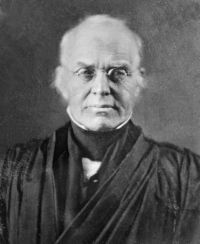
Portrait of Joseph Story Joseph Story D'Wole v. Jacques/Opinion of the Court…

If A agree to advance B a sum of money, for which B is to be answerable, but at the same time it is expressed upon the undertaking, that C will do some act for the security of A, and enter into an agreement with A for that purpose; it would scarcely seem a case of a mere collateral undertaking; but rather, if one might use the phrase, a trilateral contract. The contract of B to repay the money, is not coincident with, nor the same contract with C to do the act. Each is an original promise, though the one may be deemed subsidiary, or secondary to the other.
Source: Wikisource

Portrait of Joseph Story Joseph Story D'Wole v. Jacques/Opinion of the Court…

The defendants in error brought an action of assumpsit in the Court below, against the plaintiff in error, founded upon a
the United States cannot be questioned; and if a citizen of any particular state, within the sense and meaning of the Constitution and Law, it must be of Massachusetts. No evidence has been offered to raise a doubt on this point. Whenever absent from Boston it was temporarily, and on the business of the plaintiffs
Source: Wikisource

Portrait of Joseph Story Joseph Story D'Wole v. Jacques/Opinion of the Court…

D'Wolf to the defendant, dated November 15th, 1825, and upon which the latter subscribed the words 'agreed to,' is the principal evidence in the cause. This letter, we say, neither proves, nor conduces to prove the promise laid in the declaration. In the first place, the plaintiffs are not parties to the contract contained in the writing; and it is a general rule, that no person can maintain an action of assumpsit, upon an agreement to which he is not a party; for in such case there can be no contract express or implied.
Source: Wikisource

Get perspective with Kwize: daily news enlightened by great literature