Summary

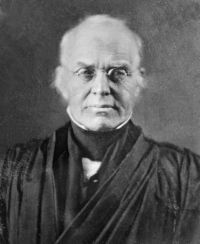
Portrait of Joseph Story Joseph Story Hyde & Gleises v. Booraem & Company…

If the decree is to affect their interests at all (as it manifestly does) , will not the court look to see what these interests and their agreement are? It is perceived, then, that these persons are the sureties of Hyde & Gleises, on the terms of their contract. And if Hyde & Gleises had consented to change the contract, without consent of the sureties, they would not have been bound, even though beneficial to their interests. There is no equity against a surety; but such have a right to stand on the exact terms of their contract.
Source: Wikisource

Portrait of Joseph Story Joseph Story Hyde & Gleises v. Booraem & Company…

And again (art. 1920 and 2041) , on the breach of any obligation to do or not to do, the other party in whose favor the obligation is contracted, is entitled either to damages, or, in cases which permit it, to a specific performance of the contract, at his option; or he may require the dissolution of the contract. But it is nowhere provided, that the party who has omitted to perform the acts which he has contracted to perform, can entitle himself, if the other party has been in no default, either to a specific performance, or to damages, or to a dissolution of the contract.
Source: Wikisource

Portrait of Joseph Story Joseph Story Hyde & Gleises v. Booraem & Company…

It has been said, that here, by the giving up of the new notes, the old debts due by Hyde & Gleises have been extinguished by novation; and therefore, their sole remedy lies upon the new contract, and notes given in pursuance thereof. But that doctrine is by no means true, as it is attempted to be applied to the circumstances of the present case. A novation will, indeed, if it be absolute and unconditional, amount to a direct extinguishment of the original debt, by substituting the new contract in its place.
Source: Wikisource

Get perspective with Kwize: daily news enlightened by great literature