Summary

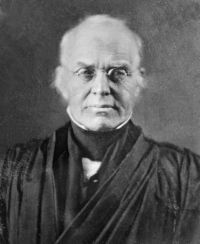
Portrait of Joseph Story Joseph Story Miller v. Stewart — Opinion of the Court

In truth, the assent of the parties to the alteration, carries with it the necessary implication, that it shall no longer be deemed an appointment for eight townships only; and the same consent of parties which created, is equally potent in dissolving the deed, and changing its original obligation. It is no objection, that to constitute a new deed, a redelivery is necessary; for if it be so, the consent to the alteration is, in law, equivalent to a redelivery. Nor is it necessary, that a surrender or revocation should be by an instrument to that effect.
Source: Wikisource

Portrait of Joseph Story Joseph Story Miller v. Stewart — Opinion of the Court

Nothing can be clearer, both upon principle and authority, than the doctrine, that the liability of a surety is not to be extended, by implication, beyond the terms of his contract. To the extent, and in the manner, and under the circumstances, pointed out in his obligation, he is bound, and no farther. It is not sufficient that he may sustain no injury by a change in the contract, or that it may even be for his benefit. He has a right to stand upon the very terms of his contract
Source: Wikisource

Portrait of Joseph Story Joseph Story Miller v. Stewart — Opinion of the Court

The appointment must, therefore, be by deed; and the effect of an alteration or interlineation of a deed, is to be decided by the principles of the common law. Now, by the common law, the alteration or interlineation of a deed, in a material part, at least, by the holder, without the consent of the other party, ipso facto, avoids the deed. It is the consent, therefore, that upholds the deed after such alteration, or interlineation. The reason is, that the deed is no longer the same. The alteration makes it a different deed; it speaks a different language; it infers a different obligation.
Source: Wikisource

Get perspective with Kwize: daily news enlightened by great literature