Summary

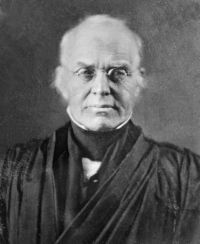
Portrait of Joseph Story Joseph Story Shipp v. Miller's heirs — Opinion of the Court

The general descriptive call to lie on the dividing ridge, as well as the call for distance, must be rejected, if a buffalo road about four miles north of the lick were to be deemed a sufficient compliance with the call for a large buffalo road; for the whole land would then lie, not on, but beyond the ridge. Such a construction of the entry would be unreasonable. Is, then, the entry void for repugnancy or uncertainty, or can it be sustained by rejecting the call for a large buffalo road?
Source: Wikisource

Portrait of Joseph Story Joseph Story Shipp v. Miller's heirs — Opinion of the Court

Supposing the entry of Chapman Austin to be good, the next inquiry is, whether it is rightly surveyed; for if it is, then Christian's and Miller's entries are, also, rightly surveyed. It is contended that, as no base or figure is given by the entry, the land cannot be laid off in any direction; and if so, neither the survey made by order of the circuit court, nor, indeed, any other survey, can be good.
Source: Wikisource

Portrait of Joseph Story Joseph Story Shipp v. Miller's heirs — Opinion of the Court

It is admitted, that there is some analogy between the cases; but, as they do not arise upon the same statute, a decision in the one furnishes no absolute authority to govern the other. There are, also, differences in the nature and objects of these statutes, which might well justify a different construction. The statute of limitations is emphatically termed a statute of repose; it is made for the purpose of quieting rights, and shutting out stale and fraudulent claims.
Source: Wikisource

Get perspective with Kwize: daily news enlightened by great literature