Summary

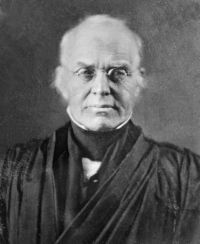
Portrait of Joseph Story Joseph Story The Dos Hermanos — Opinion of the Court

Green, we do not feel at liberty to make an order for farther proof. We are not satisfied that it would be a safe or convenient rule, unless, under very special circumstances, to allow parties who have had the benefit of plenary proof in the court below, to have an order for farther proof in this court upon the same points. Much less should we incline to allow it in a case of pregnant suspicion, where the evidence must come from sources tainted with so many unwholesome personal interests, and so many infusions of doubtful credit.
Source: Wikisource

Portrait of Joseph Story Joseph Story The Dos Hermanos — Opinion of the Court

On the contrary, several of the stockholders, or their agents, have been examined, and not one of them admits his proportion to have been paid. Indeed, Mr. Miller himself admits that he has never paid any; and gives this extraordinary excuse, that he had orders from Mr. Green not to pay over the money until three months after his arrival at New-Orleans. This excuse is entirely at variance with the receipt given by Mr. Miller, and is as little reconcilable with the letter of Mr. Green to his nephew, respecting his own remittance.
Source: Wikisource

Portrait of Joseph Story Joseph Story The Dos Hermanos — Opinion of the Court

The claim of Mr. Green must, therefore, be rejected, and the goods be condemned as good and lawful prize.
It has been urged, that there is no evidence upon the record that the captors were duly commissioned, and that farther proof ought to be required on this point. This, however, is a question which the claimant has no right to litigate. He has no legal standing before the court to assert the rights of the United States. If the capture was without a commission, the condemnation must be to the United States generally
Source: Wikisource

Get perspective with Kwize: daily news enlightened by great literature