Summary

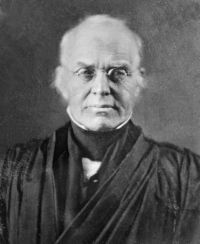
Portrait of Joseph Story Joseph Story United States v. Kirkpatrick — Opinion of the Court

The government can transact its business only through its agents; and its fiscal operations are so various, and its agencies so numerous and scattered, that the utmost vigilance would not save the public from the most serious losses, if the doctrine of laches can be applied to its transactions. It would, in effect, work a repeal of all its securities. On the other hand, the mischiefs to the agents and their sureties would be scarcely less tolerable.
Source: Wikisource

Portrait of Joseph Story Joseph Story United States v. Kirkpatrick — Opinion of the Court

For if, where the laws, as in the present instance, require quarterly accounts and settlements, a mere omission to account is to be deemed a breach of the bond, for which a suit must be immediately brought, upon the peril of loss from imputed laches; the Collectors and their sureties would be oppressed with the most expensive and vexatious litigation; and their whole real estate, which by law is subjected to a lien, upon the commencement of a suit, would be perpetually embarrassed in its transfers.
Source: Wikisource

Portrait of Joseph Story Joseph Story United States v. Kirkpatrick — Opinion of the Court

In short, if the nomination to, and approval by the Senate, was a mere confirmation, and not equivalent to a new appointment, there was no necessity for the second commission; and yet, the argument supposes, that it could not be dispensed with; for if no commission had been issued, the first, by its own limitation, would have expired.
Then, as to the point of laches, we are of opinion that the charge of the Court below, which supposes that laches will discharge the bond, cannot be maintained as law. The general principle is, that laches is not imputable to the Government
Source: Wikisource

Get perspective with Kwize: daily news enlightened by great literature