Summary

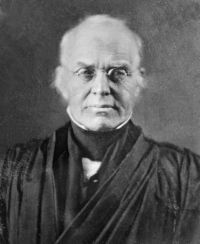
Portrait of Joseph Story Joseph Story United States v. Tingey — Opinion of the Court

If the United States are competent to become parties to such a bond without legislative requisitions, it is equally true that the right to direct or require such a bond belongs to the executive. It is a part of its constitutional power: nor does the circumstance that the authority of the legislature may also direct the taking of a particular bond negative the existence of such a power. The president is enjoined 'to take care that the laws be faithfully executed.' In the performance of this trust, he not only may, but he is bound to avail himself of every appropriate means not forbidden by law.
Source: Wikisource

Portrait of Joseph Story Joseph Story United States v. Tingey — Opinion of the Court

The United States, 9 Cranch, 28, establishes the principle that a bond required by a public officer, and given in conformity to that requisition, is still a voluntary bond, unless it be obtained by fraud, circumvention or oppression. There is no pretence that any such means were used in this case. The government and people of the United States are interested to enforce the faithful discharge of public duty by those who are entrusted to perform it. They have a right to require it, and are entitled to be indemnified for a failure to comply with the requisition.
Source: Wikisource

Get perspective with Kwize: daily news enlightened by great literature