Summary

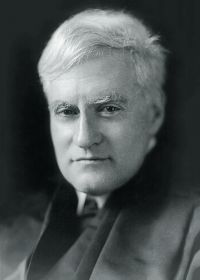
Portrait of Benjamin N. Cardozo Benjamin N. Cardozo United States v. Mack — Opinion of the Court

Both sides make much of the analogy supplied by the responsibility of bail. The analogy exists, though it is far from being complete. Its implications give support on the whole to the position of the government. At common-law bail might be exonerated as of right by the surrender of their principal if their liability had not yet been 'fixed.' There was much learned disquisition as to the time when that event occurred. To avoid confusion of thought, a distinction must be drawn between civil and criminal cases, for the function of bail in each is essentially diverse.
Source: Wikisource

Portrait of Benjamin N. Cardozo Benjamin N. Cardozo United States v. Mack — Opinion of the Court

By the provisions of the Prohibition Act, an officer who seizes a vessel or other conveyance transporting intoxicating liquors must deliver it to the owner upon the execution of 'a good and valid bond, with sufficient sureties, in a sum double the value of the property,' to be approved by the officer and to be 'conditioned to return said property to the custody of said officer on the day of trial to abide the judgment of the court.' National Prohibition Act, c.
Source: Wikisource

Portrait of Benjamin N. Cardozo Benjamin N. Cardozo United States v. Mack — Opinion of the Court

We find no adequate reason for thus rewarding an offender. If the condition had not been broken, the government would have received the value of the vessel, or at least that result would have ensued for anything to the contrary shown in this record. Principal and surety covenanted that in the event of such a default the bond should become payable according to its terms. They must be held to their engagement.
Source: Wikisource

Get perspective with Kwize: daily news enlightened by great literature