Summary

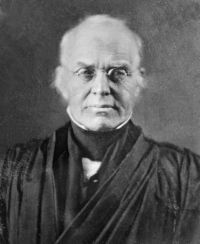
Portrait of Joseph Story Joseph Story Veazie v. Wadleigh — Opinion of the Court

In construing a statute providing for such a novel mode of obtaining the decision of an appellate court upon the matters of controversy between the parties, it is not surprising, that there should be some difficulty in ascertaining the precise rights of the parties; whether the party upon whose motion the questions are brought here, is to be treated like a plaintiff in error, as entitled to dismiss his own certified cause, at his pleasure
Source: Wikisource

Portrait of Joseph Story Joseph Story Veazie v. Wadleigh — Opinion of the Court

The only point of difficulty is, whether the filing of the above paper in the circuit court, in vacation, constitutes, per se, a discontinuance of the original cause, without any action of the circuit court thereon, upon which this court ought now to act. According to the practice of some of the courts in the Union, it is understood to be the right of the plaintiff to enter a discontinuance of the cause, at any time, either in term or in vacation, upon the payment of costs, before a verdict is given, without a formal assent of, or application to, the court
Source: Wikisource

Portrait of Joseph Story Joseph Story Veazie v. Wadleigh — Opinion of the Court

In Massachusetts and Maine, a different practice is understood to prevail; and the discontinuance can only be in term, and is, generally, upon application to the court. In many cases, however, in these states, it is a matter of right. In Haskell v. Whitney, 12 Mass. 49-50, this doctrine was expressly recognised. The court, on that occasion, said, 'The plaintiff or demandant may, in various modes, become nonsuit, or discontinue his cause, at his pleasure; at the beginning of every term at which he is demandable, he may neglect or refuse to appear
Source: Wikisource

Get perspective with Kwize: daily news enlightened by great literature