Summary

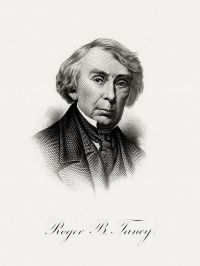
Portrait of Roger B. Taney Roger B. Taney Ex Parte Poultneys — Opinion of the Court

Every court of equity possesses the power to mould its rules in relation to the time and manner of appearing and answering, so as to prevent the rule from working injustice; and it is not only in the power of the court, but it is its duty to exercise a sound discretion upon this subject, and to enlarge the time, whenever it shall appear that the purposes of justice require it.
Source: Wikisource

Portrait of Roger B. Taney Roger B. Taney Ex Parte Poultneys — Opinion of the Court

We perceive nothing in the proceedings of the circuit court to warrant the rule to show cause which has been asked for in behalf of the complainants. On the contrary, judging from the evidence contained in the record, the conduct of the court in relation to the cause in question, appears to have been strictly conformable to the practice and principles of a court of equity.
Source: Wikisource

Portrait of Roger B. Taney Roger B. Taney Ex Parte Poultneys — Opinion of the Court

And, from the terms used in the motion of the complainants, we suppose they desired the court to deny the motion of the defendants, and to allow the complainants to proceed at the rules to be held by the clerk, without any extension of the time to answer.
The rules of chancery practice, mentioned in the motion of the complainants, must, of course, mean the rules prescribed by this Court for the government of the courts of equity of the United States, under the act of congress of May 8, 1792, ch. 137, s. 2; which are undoubtedly obligatory on the circuit courts.
Source: Wikisource

Get perspective with Kwize: daily news enlightened by great literature