Summary

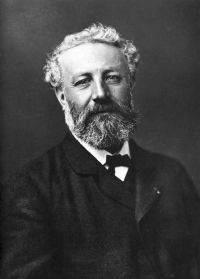
Portrait of Jules Verne Jules Verne,  Cæsar Cascabel — Part 1, Chapter XI (1890)

“ Meanwhile, what was the young Indian girl doing? Nothing but what was very simple. She aided Mrs. Cascabel, with a deal of intelligence, in all the preparations for the journey. The good woman loved her with a mother's love: she loved her as she did Napoleona, and every day she grew more and more attached to her second daughter. Every one, indeed, was really fond of Kayette, and, no doubt, the poor girl enjoyed a happiness she had never tasted among the nomadic tribes, under the tents of the Indians. ”
Source: Wikisource

Portrait of Jules Verne Jules Verne,  Cæsar Cascabel — Part 1, Chapter XI (1890)

“ Kayette agrees to look upon me as her father, and I ask you for a little room for her in the Fair Rambler!”
Cries of joy greeted Mr. Sergius, and the fondest of caresses were lavished on “little Kayette.” The happiness with which she, on her side, had accepted the proposal, is not to be told.
“You are a good heart, Mr. Sergius!” cried out Cascabel, not without emotion.
“Why so, my friend? Have you forgotten what Kayette has done for me? Is it not natural she should become my child, when I owe my life to her?”
”
Source: Wikisource

Portrait of Jules Verne Jules Verne,  Cæsar Cascabel — Part 1, Chapter XI (1890)

“ At this time already, Sitka possessed all those edifices which constitute what is called a “town,” a Lutheran church, a very simple edifice whose architectural style does not lack grandeur; a Greek church with one of those cupolas that are so little in harmony with a fog-laden sky, so different from the Eastern skies; a club, the Club Gardens, a sort of Parisian Tivoli where the habitual visitor and the traveler find restaurants, cafes, bars, and amusements of all kinds; a club-house, the doors of which are open to single men only ”
Source: Wikisource

Get perspective with Kwize: daily news enlightened by great literature