Summary

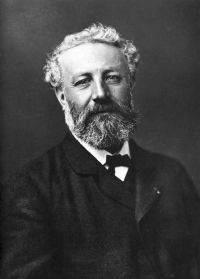
Portrait of Jules Verne Jules Verne In Search of the Castaways; or Captain Grant's Children… (1911)

The shipwrecked party were in an agonizing situation on their narrow raft, and overtaken by the shades of night.
Some of the party fell into a troubled sleep, a prey to evil dreams; others could not close an eye. When the day dawned, the whole party were worn out with fatigue.
With the rising tide the wind blew again toward the land. It was six o'clock in the morning, and there was no time to lose. John arranged everything for resuming their voyage, and then he ordered the anchor to be weighed.
Source: Wikisource

Portrait of Jules Verne Jules Verne In Search of the Castaways; or Captain Grant's Children… (1911)

A considerable swell raised the waves, and seemed to set in continuously toward the coast, and perceiving this, Glenarvan asked John why he did not take advantage of this swell to get nearer to the land.
"Your Lordship is deceived by an optical illusion," said the young captain. "Although the swell seems to carry the waves landward, it does not really move at all. It is mere undulating molecular motion, nothing more. Throw a piece of wood overboard and you will see that it will remain quite stationary except as the tide affects it. There is nothing for it but patience."
Source: Wikisource

Portrait of Jules Verne Jules Verne In Search of the Castaways; or Captain Grant's Children… (1911)

But with a raft allowance must be made. If the wind held, they might reach the land in one tide. But if the breeze died away, the ebb would carry them away from the shore, and they would be compelled to anchor and wait for the next tide, a serious consideration, and one that filled John Mangles with anxiety.
Still he hoped to succeed. The wind freshened. The tide had turned at ten o'clock, and by three they must either make the land or anchor to save themselves from being carried out to sea. They made a good start.
Source: Wikisource

Get perspective with Kwize: daily news enlightened by great literature