Summary

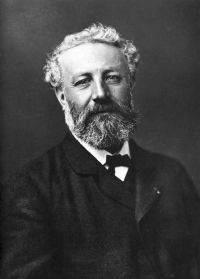
Portrait of Jules Verne Jules Verne Journey into the Interior of the Earth… (1877)

Fresh discoveries of remains in the pleiocene formation had emboldened other geologists to refer back the human species to a higher antiquity still. It is true that these remains were not human bones, but objects bearing the traces of his handiwork, such as fossil leg-bones of animals, sculptured and carved evidently by the hand of man.
Thus, at one bound, the record of the existence of man receded far back into the history of the ages past
Source: Wikisource

Portrait of Jules Verne Jules Verne Journey into the Interior of the Earth… (1877)

For of course my uncle was right, and wiser men than his nephew would have had some trouble to refute his statements.
Another remarkable thing. This fossil body was not the only one in this immense catacomb. We came upon other bodies at every step amongst this mortal dust, and my uncle might select the most curious of these specimens to demolish the incredulity of sceptics.
In fact it was a wonderful spectacle, that of these generations of men and animals commingled in a common cemetery. Then one very serious question arose presently which we scarcely dared to suggest.
Source: Wikisource

Portrait of Jules Verne Jules Verne Journey into the Interior of the Earth… (1877)

Eminent geologists have denied his existence, others no less eminent have affirmed it. The St. Thomases of palæontology, if they were here, might now touch him with their fingers, and would be obliged to acknowledge their error. I am quite aware that science has to be on its guard with discoveries of this kind. I know what capital enterprising individuals like Barnum have made out of fossil men.
Source: Wikisource

Get perspective with Kwize: daily news enlightened by great literature