Summary

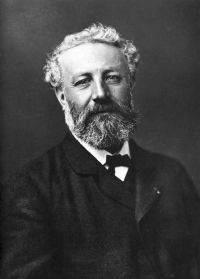
Portrait of Jules Verne Jules Verne Mathias Sandorf — Chapters V-VI (1885)

The central station, provided with steam motors and boilers, contained twenty dynamo machines on a new and greatly improved system, and there the currents were produced which special accumulators of extraordinary intensity stored up in convenient form for the general use of Antekirtta—the water supply, the lighting of the town, telegraphs, telephones, and the circular and other railways on the island. In a word, the doctor had applied the studies of his youth to practical purposes, and realized one of the desiderata of modern science—the transmission of power to a distance by electric agency.
Source: Wikisource

Portrait of Jules Verne Jules Verne Mathias Sandorf — Chapters V-VI (1885)

It was a city in which the inhabitants were members of the same family, and could live their lives in common without forfeiting the quiet and independence of home. Happy were the people of Antekirtta. “Ubi bene, ibi patria,” is perhaps not a very patriotic motto, but it was appropriate enough for those who had gathered at the doctor's invitation and left their old country, in which they had been miserable, to find happiness and comfort in this hospitable island.
Source: Wikisource

Portrait of Jules Verne Jules Verne Mathias Sandorf — Chapters V-VI (1885)

That Point Pescade with his agility and Cape Matifou with his prodigious strength rendered efficient service we need hardly stop to say. The halyards would have soon broken if they had not yielded to the weight of Cape Matifou.
But the position of the “Ferrato” was still very serious. A steamer, with her long hull, her want of beam, her slight draught, and her insufficient canvas, is not made for working against the wind. If she is laid too near, and the sea is rough, she is driven back in irons, or she is blown off altogether.
Source: Wikisource

Get perspective with Kwize: daily news enlightened by great literature