Summary

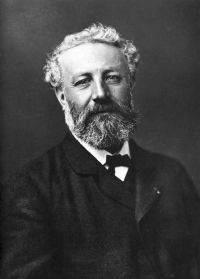
Portrait of Jules Verne Jules Verne Michael Strogoff (1876) — Chapter XIX (1876)

Marfa could with a word have paid Nadia for all her devotion to her. She could have told her that her companion, Nicholas Korpanoff, or rather Michael Strogoff, had not perished in the waters of the Irtych, since it was some days after that incident that she had met him, that she had spoken to him.
But she restrained herself, she was silent, and contented herself with saying, "Hope, my child! Misfortune will not overwhelm you. You will see your father again; I feel it; and perhaps he who gave you the name of sister is not dead. God cannot have allowed your brave companion to perish.
Source: Wikisource

Portrait of Jules Verne Jules Verne Michael Strogoff (1876) — Chapter XIX (1876)

Confidante and accomplice, Sangarre, without country, without family, had been delighted to put her vagabond life to the service of the invaders thrown by Ogareff on Siberia. To the wonderful cunning natural to her race she added a wild energy, which knew neither forgiveness nor pity. She was a savage worthy to share the wigwam of an Apache or the hut of an Andaman.
Since her arrival at Omsk, where she had rejoined him with her Tsiganes, Sangarre had not again left Ogareff. The circumstance that Michael and Marfa Strogoff had met was known to her.
Source: Wikisource

Portrait of Jules Verne Jules Verne Michael Strogoff (1876) — Chapter XIX (1876)

Amongst the prisoners brought by Ivan Ogareff to the Tartar camp was an old woman, whose taciturnity seemed to keep her apart from all those who shared her fate. Not a murmur issued from her lips. She was like a statue of grief. This woman was more strictly guarded than anyone else, and, without her appearing to notice, was constantly watched by the Tsigane Sangarre. Notwithstanding her age she was compelled to follow the convoy of prisoners on foot, without any alleviation of her suffering.
Source: Wikisource

Get perspective with Kwize: daily news enlightened by great literature