Summary

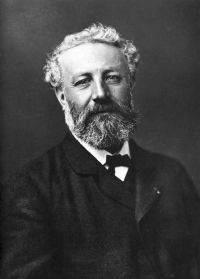
Portrait of Jules Verne Jules Verne Michael Strogoff (1876) — Chapter XVIII (1876)

Michael was one of those men who never give in while life exists. He was yet alive; he still had the imperial letter safe; his disguise had been undiscovered. He was included amongst the numerous prisoners whom the Tartars were dragging with them like cattle; but by approaching Tomsk he was at the same time drawing nearer to Irkutsk. Besides, he was still in front of Ivan Ogareff.
"I will get there!" he repeated to himself.
Since the affair of Kolyvan all the powers of his mind were concentrated on one object--to become free! How should he escape from the Emir's soldiers?
Source: Wikisource

Portrait of Jules Verne Jules Verne Michael Strogoff (1876) — Chapter XVIII (1876)

When the prisoners were brought into the camp, the Emir was in his tent. He did not show himself. This was fortunate, no doubt. A sign, a word from him might have been the signal for some bloody execution. But he intrenched himself in that isolation which constitutes in part the majesty of Eastern kings. He who does not show himself is admired, and, above all, feared.
As to the prisoners, they were to be penned up in some enclosure, where, ill-treated, poorly fed, and exposed to all the inclemencies of the weather, they would await Feofar's pleasure.
Source: Wikisource

Portrait of Jules Verne Jules Verne Michael Strogoff (1876) — Chapter XVIII (1876)

He knows that it does not do to trifle with the rights of men, and he has no interest to retain us; on the contrary. But to ask a favor of that gentleman does not quite suit my taste."
"But that gentleman is not in the camp, or at least I have not seen him here," observed Blount.
"He will come. He will not fail to do that. He must join the Emir. Siberia is cut in two now, and very certainly Feofar's army is only waiting for him to advance on Irkutsk."
Source: Wikisource

Get perspective with Kwize: daily news enlightened by great literature