Summary

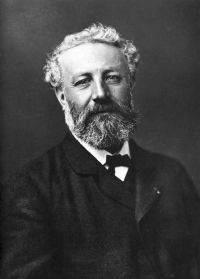
Portrait of Jules Verne Jules Verne Michael Strogoff (1876) — Chapter XXII (1876)

Michael was thrust forward by his guards to the foot of the terrace, and Feofar said to him, "You came to see our goings out and comings in, Russian spy. You have seen for the last time. In an instant your eyes will be forever shut to the day."
Michael's fate was to be not death, but blindness; loss of sight, more terrible perhaps than loss of life. The unhappy man was condemned to be blinded.
However, on hearing the Emir's sentence Michael's heart did not grow faint. He remained unmoved, his eyes wide open, as though he wished to concentrate his whole life into one last look.
Source: Wikisource

Portrait of Jules Verne Jules Verne Michael Strogoff (1876) — Chapter XXII (1876)

But at that instant several hundreds of slaves, bearing lighted torches, entered the square. Led by Sangarre, Tsiganes and Persians reappeared before the Emir's throne, and showed off, by the contrast, their dances of styles so different. The instruments of the Tartar orchestra sounded forth in harmony still more savage, accompanied by the guttural cries of the singers.
Source: Wikisource

Portrait of Jules Verne Jules Verne Michael Strogoff (1876) — Chapter XXII (1876)

Sangarre did not dance, but she stood as a statue in the midst of the performers, whose style of dancing was a combination of that of all those countries through which their race had passed--Turkey, Bohemia, Egypt, Italy, and Spain. They were enlivened by the sound of cymbals, which clashed on their arms, and by the hollow sounds of the "daires"--a sort of tambourine played with the fingers.
Sangarre, holding one of those daires, which she played between her hands, encouraged this troupe of veritable corybantes. A young Tsigane, of about fifteen years of age, then advanced.
Source: Wikisource

Get perspective with Kwize: daily news enlightened by great literature