Summary

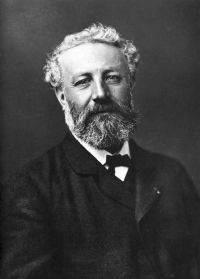
Portrait of Jules Verne Jules Verne The Adventures of Three Englishmen and Three Russians in Southern Africa…

All day Sir John beat fruitlessly the bushes and long grass. He could not unearth a single animal that was fit to eat. The very birds, disturbed from their retreats, had gone to the underwood on the shore for shelter. Sir John was extremely vexed, inasmuch as he was not hunting merely for personal gratification, but to supply the necessities of the party. Perhaps he himself suffered from hunger more than his three colleagues, whose attention was more riveted by their application to science. The sailors and Mokoum suffered equally with Sir John.
Source: Wikisource

Portrait of Jules Verne Jules Verne The Adventures of Three Englishmen and Three Russians in Southern Africa…

The only drawback is, that they must be swallowed in large quantities to satisfy any longing for food. The Africans generally mix them with the gum of the mimosa, thus rendering them capable of affording a less unsubstantial meal; but as the mimosa did not grow on Mount Scorzef, the bushman had to content himself with his rice au naturel.
Sir John, in spite of his repugnance, resolved to imitate him. The insects poured forth by thousands from their enormous ant-hill, which was none other than the mound of earth by which the weary sufferers had reclined.
Source: Wikisource

Portrait of Jules Verne Jules Verne The Adventures of Three Englishmen and Three Russians in Southern Africa…

After an hour's search Sir John had seen no trace of game. Some little birds with dark wings and red beaks flew out of the bushes, but at the first shot they disappeared, no more to return. It was evident that the garrison must not depend on the products of the chase for sustenance.
“We can fish in the lake,” said Sir John, standing and contemplating the fine extent of water.
“To fish without net or line,” replied the bushman, “is as difficult as to lay hands on birds on the wing.
Source: Wikisource

Get perspective with Kwize: daily news enlightened by great literature