Summary

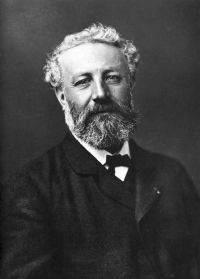
Portrait of Jules Verne Jules Verne The Blockade Runners — III. Things Are not what they Seem (1865)

I was then in England, living with a relation who has just died, and left alone, with no help but that of Crockston, our faithful servant, I wished to go to my father and share his prison with him."
"What was Mr. Halliburtt, then?" asked James Playfair.
"A loyal and brave journalist," replied Jenny proudly, one of the noblest editors of the Tribune, and the one who was the boldest in defending the cause of the negroes."
"An Abolitionist," cried the Captain angrily; "one of those men who, under the vain pretence of abolishing slavery, have deluged their country with blood and ruin."
Source: Wikisource

Portrait of Jules Verne Jules Verne The Blockade Runners — III. Things Are not what they Seem (1865)

An American, as letters seem to prove?" Crockston did not answer.
"Boatswain," said James Playfair, "fifty lashes with the cat-o'-nine-tails to loosen his tongue. Will that be enough, Crockston?"
"It will remain to be seen," replied John Stiggs' uncle without moving a muscle.
"Now then, come along, men," said the boatswain.
At this order, two strong sailors stripped Crockston of his woollen jersey; they had already seized the formidable weapon, and laid it across the prisoner's shoulders, when the novice, John Stiggs, pale and agitated, hurried on deck.
Source: Wikisource

Portrait of Jules Verne Jules Verne The Blockade Runners — III. Things Are not what they Seem (1865)

Followed she might be, and prevented from forcing the blockade, and precisely for this reason had James Playfair sacrificed everything to the speed of his ship, in order not to be pursued.
Howbeit a careful watch was kept on board, and, in spite of the extreme cold, a man was always in the rigging ready to signal the smallest sail that appeared on the horizon.
Source: Wikisource

Get perspective with Kwize: daily news enlightened by great literature