Summary

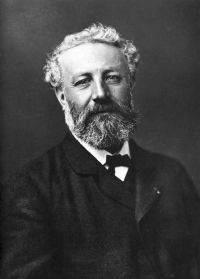
Portrait of Jules Verne Jules Verne,  The Mysterious Island — Chapter 21 (1874)

“ And I believe that centuries succeeding to centuries, and insects to insects, this Pacific may one day be changed into a vast continent, which new generations will inhabit and civilize in their turn."
"That will take a long time," said Pencroft.
"Nature has time for it," replied the engineer.
"But what would be the use of new continents?" asked Herbert. "It appears to me that the present extent of habitable countries is sufficient for humanity. Yet nature does nothing uselessly."
”
Source: Wikisource

Portrait of Jules Verne Jules Verne,  The Mysterious Island — Chapter 21 (1874)

“ Then these new continents will become, in their turn, uninhabitable; heat will die away, as does the heat from a body when the soul has left it; and life will disappear from the globe, if not for ever, at least for a period. Perhaps then, our spheroid will rest-- will be left to death--to revive some day under superior conditions! But all that, my friends, is the secret of the Author of all things; and beginning by the work of the insects, I have perhaps let myself be carried too far, in investigating the secrets of the future. ”
Source: Wikisource

Portrait of Jules Verne Jules Verne,  The Mysterious Island — Chapter 21 (1874)

“ Who can say, that at this period, the equatorial regions will not be too small, to contain and nourish terrestrial humanity? Now, may not provident nature, so as to give refuge to all the vegetable and animal emigration, be at present laying the foundation of a new continent under the Equator, and may she not have entrusted these insects with the construction of it? I have often thought of all these things, my friends, and I seriously believe that the aspect of our globe will some day be completely changed ”
Source: Wikisource

Get perspective with Kwize: daily news enlightened by great literature