Summary

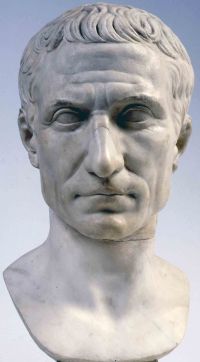
Portrait of Julius Caesar Julius Caesar,  Commentaries on the Gallic War…

“ He himself, having drawn up his army in three lines, advanced to the camp of the enemy. Then at last of necessity the Germans drew their forces out of camp, and disposed them canton by canton, at equal distances, the Harudes, Marcomanni, Tribocci, Vangiones, Nemetes, Sedusii, Suevi; and surrounded their whole army with their chariots and wagons, that no hope might be left in flight. On these they placed their women, who, with disheveled hair and in tears, entreated the soldiers, as they went forward to battle, not to deliver them into slavery to the Romans. ”
Source: Wikisource

Portrait of Julius Caesar Julius Caesar,  Commentaries on the Gallic War…

“ That Ariovistus, during his [Caesar's] consulship, had most anxiously sought after the friendship of the Roman people; why should any one judge that he would so rashly depart from his duty? He for his part was persuaded, that, when his demands were known and the fairness of the terms considered, he would reject neither his nor the Roman people's favor. But even if, driven on by rage and madness, he should make war upon them, what after all were they afraid of?—or why should they despair either of their own valor or of his zeal? ”
Source: Wikisource

Portrait of Julius Caesar Julius Caesar,  Commentaries on the Gallic War…

“ If the unsuccessful battle and flight of the Gauls disquieted any, these, if they made inquiries, might discover that, when the Gauls had been tired out by the long duration of the war, Ariovistus, after he had many months kept himself in his camp and in the marshes, and had given no opportunity for an engagement, fell suddenly upon them, by this time despairing of a battle and scattered in all directions, and was victorious more through stratagem and cunning than valor. ”
Source: Wikisource

Get perspective with Kwize: daily news enlightened by great literature