 Ralph Waldo Emerson,
Essays by Ralph Waldo Emerson
Ralph Waldo Emerson,
Essays by Ralph Waldo Emerson
“ "His hidden meaning lies in our endeavors; Our valors are our best gods." ”
Valor, defined as heroic courage and bravery, holds a central place in discussions of virtue and moral excellence. From Ralph Waldo Emerson’s assertion that “our valors are our best gods” to L. P. Jacks’ connection of courage to the “foundation of virtue,” writers have examined its role in shaping character and ethical life.
John Ruskin highlighted its harmony with purposeful living, while John Stuart Blackie encouraged the pursuit of soulful excellence over material gain. These viewpoints collectively emphasize valor not merely as personal bravery but as a cornerstone of moral and spiritual alignment, bridging individual aspiration with universal ideals.
Ralph Waldo Emerson,
Essays by Ralph Waldo Emerson
“ "His hidden meaning lies in our endeavors; Our valors are our best gods." ”
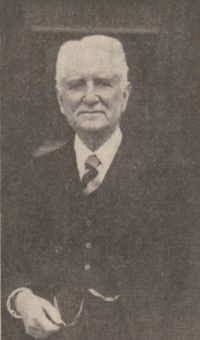 L. P. Jacks,
Religious Perplexities
L. P. Jacks,
Religious Perplexities
“ But, illogical though it be in that construction, I nevertheless regard it—this value which each man finds in his being the man he is—as the growing point of the higher logic which, when fully born, reveals the Kingdoms of the Real. This is the root of the intuition of value, the first point of contact between the human mind and the things that are eternal, Beauty, Goodness and Truth. Morally it takes the form of courage, which is the foundation of virtue. ”
 John Ruskin,
The Crown of Wild Olive
John Ruskin,
The Crown of Wild Olive
“ But if you can fix some conception of a true human state of life to be striven for—life for all men as for yourselves—if you can determine some honest and simple order of existence; following those trodden ways of wisdom, which are pleasantness, and seeking her quiet and withdrawn paths, which are peace;—then, and so sanctifying wealth into 'commonwealth,' all your art, your literature, your daily labours, your domestic affection, and citizen's duty, will join and increase into one magnificent harmony. ”
 John Stuart Blackie,
Four Phases of Morals: Socrates…
John Stuart Blackie,
Four Phases of Morals: Socrates…
“ For what I do day after day treading your streets is simply this, that, speaking to both young and old, I exhort them not to seek in the first place money or anything material, but to stretch every nerve that their soul may be as excellent as possible; for that virtue and all excellence grow not from gold, but rather that gold and all things truly good, both in private and public life, grow to men from the possession of virtue as the root of all good. ”
 Orson F. Whitney,
Elias: An Epic of the Ages
Orson F. Whitney,
Elias: An Epic of the Ages
“ But truth taught charity, gave me to see, As face to face one sees familiar friend, Why men are not alike in magnitude.Some souls, than others, have more summits climbed, More light absorbed, more moral might evolved. Dowered are they with wealth from earlier spheres; Hence wiser, worthier, than those they lead Through precept's vale, up steep example's height, 200 To where love, beauty, wealth, power, glory, reign. ”
“ Thus, in conduct, actions are judged 'good' or 'evil' and 'right' or 'wrong'; in thinking, ideas are 'true' or 'false,' and 'relevant' or 'irrelevant'; for art, objects are 'beautiful' or 'ugly,' and so forth, for the modes of valuation in life are innumerable. Any one of these adjectives either denotes value or censures lack of worth, and each gets its meaning by reference to the specific purpose, moral, aesthetic, or intellectual, it appeals to. The summum bonum, or supreme good, will then be the ideal of the harmonious satisfaction of all purposes. ”
 Alexander Maclaren,
Expositions of Holy Scripture: St…
Alexander Maclaren,
Expositions of Holy Scripture: St…
“ Noble aims, high aspirations, pure thoughts, treasures of wisdom, treasures of goodness—these are the real wealth corresponding to man's nature, destined for his enrichment, and to last with him for ever. But we may gather the whole contrast into two words: the small, the 'unrighteous,' the wealth which being mine is not mine but remains another's, and foreign to me, is the world. The great riches, the 'true riches,' the good destined for me, and for which I am destined, is God. In these two words you have the antithesis, the real antithesis, God versus the world. ”
 Jonathan Edwards,
Selected Sermons of Jonathan Edwards
Jonathan Edwards,
Selected Sermons of Jonathan Edwards
“ How much more should they be influenced, and stirred up to follow them, and be like them, when they obtain that spiritual and eternal happiness that is of infinitely more worth than all the prosperity and glory of this world! ”
Rev. W. Harris, The Preacher's Complete Homiletic Commentary on the Books of the Bible…
“ The value of riches is regulated by our wants and the wants of the society in which we live. The value of honour changes according to the opinions, the usages, the political institutions of mankind. The value of sensual pleasure depends much on our constitution, age, and health. Even the value of mental endowments is subjection to vicissitudes. The value of true wisdom alone is invariably the same. 3. It is much more independent of station than any other good. Riches would cease to be riches if all men lived in abundance. ”
Earl of Philip Dormer Stanhope Chesterfield, Letters to His Son, 1748
“ Among men, how often have I seen the most solid merit and knowledge neglected, unwelcome, or even rejected, for want of them! While flimsy parts, little knowledge, and less merit, introduced by the Graces, have been received, cherished, and admired. Even virtue, which is moral beauty, wants some of its charms if unaccompanied by them. ”
Oliver Goldsmith, The Complete Poetical Works of Oliver Goldsmith
“ From Art more various are the blessings sent; Wealth commerce, honour, liberty, content. Yet these each other’s power so strong contest, That either seems destructive of the rest. 90 Where wealth and freedom reign, contentment fails, And honour sinks where commerce long prevails. Hence every state to one lov’d blessing prone, Conforms and models life to that alone. Each to the favourite happiness attends, 95 And spurns the plan that aims at other ends; Till, carried to excess in each domain, This favourite good begets peculiar pain. ”
“ All other things hang upon the soul, and the things of the soul herself hang upon wisdom, if they are to be good; and so wisdom is inferred to be that which profits—and virtue, as we say, is profitable? ”
 Charles Kingsley,
Lectures Delivered in America in 1874
Charles Kingsley,
Lectures Delivered in America in 1874
“ I know what answer healthy souls have made in every age to that question; and what they will make to the end, as long as the respect of their fellow-creatures is, as our Creator meant that it should be, precious to virtuous men. And let none talk of ‘the play-game of a painted stone,’ of ‘the worthless honours of a bust.’ The worth of honour lies in that same worthlessness. ”
Anonymous, The fourth progressive reader (1871)
“ Such are, then, the consequences of firmness and stability of character; and such the rewards which he may look for, who, solemnly devoting himself to the discharge of the duties of that station or condition which Providence has assigned him, pursues them with steady and undeviating labor. It is the character which unites all that is valuable or noble in human [160] life, the tranquillity of conscience, the honors of wisdom, and the dignity of virtue. ”
Various, Chambers's Edinburgh Journal, No…
“ What merit have I shewn—by what good intention towards the world have I been animated—what has been the positive amount of those services of mine on which I found my pretensions to the world's rewards? ”
 John of the Cross,
Ascent of Mount Carmel
John of the Cross,
Ascent of Mount Carmel
“ With me are riches and glory, high riches and justice. Better is the fruit that ye will find in me than gold and precious stones; and my generation — namely, that which ye will engender of me in your souls — is better than choice silver. ”
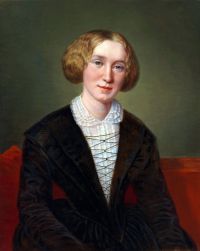 George Eliot,
The Essays of "George Eliot"
George Eliot,
The Essays of "George Eliot"
“ Those precious benefits form a chief part of what I may call the common estate of society: a wealth over and above buildings, machinery, produce, shipping, and so on, though closely connected with these; a wealth of a more delicate kind, that we may more unconsciously bring into danger, doing harm and not knowing that we do it. I mean that treasure of knowledge, science, poetry, refinement of thought, feeling, and manners, great memories and the interpretation of great records, which is carried on from the minds of one generation to the minds of another. ”
American Anti-Slavery Society, The Anti-Slavery Examiner, Omnibus
“ The eternal distinction between a person and a thing, trampled under foot—the crowning distinction of all others—alike the source, the test, and the measure of their value—the rational, immortal principle, consecrated by God to universal homage in a baptism of glory and honor, by the gift of his Son, his Spirit, his word, his presence, providence, and power ”
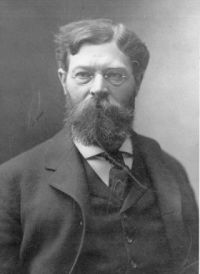 William De Witt Hyde,
The Five Great Philosophies of Life
William De Witt Hyde,
The Five Great Philosophies of Life
“ If held subject to whatever drafts Love may make upon it,—whether gifts to the poor, or support of good causes, or employment of honest workmen, or development of industrial enterprises, be the form Love's drafts take,—then all wealth so held is a blessing to the world and an honour to its owner, a glory to God and a service to man. ”
B. G. Jefferis and J. L. Nichols, Searchlights on Health — A Good Name (1919)
“ A NEW VIRTUE.—May a new virtue come into favor, all our high rewards, those from the ballot-box, those from employers, the rewards of society, the rewards of the press, should be offered only to the worthy. A few years of rewarding the worthy would result in a wonderful zeal in the young to build up, not physical property, but mental and spiritual worth. ”
John D. Philbrick, The American Union Speaker
“ You have then mistaken your path, and ill employed your industry. "What reward have I then, for all my labor?" What reward! A large, comprehensive soul, well purged from vulgar fears, and perturbations, and prejudices; able to comprehend and interpret the works of man,—of God; a rich, flourishing, cultivated mind, furnished with inexhaustible stores of entertainment and reflection; a perpetual spring of fresh ideas, and the conscious dignity of superior intelligence. ”
 William Jennings Bryan,
The World's Famous Orations
(1906)
William Jennings Bryan,
The World's Famous Orations
(1906)
“ Do you ever fail in attention to what interests your honor or glory? What indefatigable cares! what exertions and industry, to make them prosper! To what lengths we see you go, to increase your interest or to improve your fortune! ”
Baron Edward Bulwer Lytton Lytton, "My Novel" — Volume 02
“ If thy riches are the tests of thy trial, so may they also be the instruments of thy virtues. Prove by thy riches that thou art compassionate and tender, temperate and benign, and thy riches themselves may become the evidence at once of thy faith and of thy works. ”
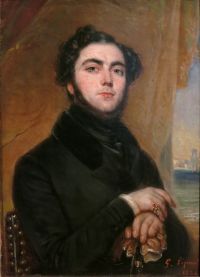 Eugène Sue,
The Mysteries of Paris, illustrated with etchings…
Eugène Sue,
The Mysteries of Paris, illustrated with etchings…
“ They will find all sorts of arguments, more or less philosophical, platonic, theological, and especially economic, against such a proposition; such as, "Virtue is its own reward;" "Virtue is a priceless gem;" "The satisfaction of the conscience is the noblest of recompenses;" and, finally, this triumphant and unanswerable objection, "The eternal happiness which awaits the just in another life ought to be sufficient to encourage mankind to do well." ”
M. Valentine, Theoretical Ethics
“ In all nations and in all ages, the ideas of interest and utility on the one hand and of virtue on the other, have been regarded by the multitude as perfectly distinct, and all languages recognize the distinction. The terms honor, justice, rectitude, or virtue, and their equivalents in every language, present to the mind ideas essentially and broadly differing from the terms prudence, sagacity, or interest. The two lines of conduct may coincide, but they are never confused, and we have not the slightest difficulty in imagining them antagonistic. ”
David Starr Jordan, The Call of the Twentieth Century…
“ You will hear that your first duty is to get land and money, place and fame. 'What is this truth you seek? What is this beauty?' men will ask in derision. If, nevertheless, God have called any of you to explain truth and beauty, be bold, be firm, be true. ”
Thomas Alfred Spalding, Elizabethan Demonology
“ But can we, with all our boasted advantages of wealth, power, and knowledge, truly say that all our aims are as high, all our desires as pure, our words as true, and our deeds as noble, as those whose opinions we feel this tendency to contemn? ”
Baron John Emerich Edward Dalberg Acton Acton, Lectures on Modern history
“ The ultimate standard of worth is personal worth, and the only progress that is worth striving after, the only acquisition that is truly good and enduring, is the growth of the soul—BIXBY, Crisis of Morals, 210. ”
Peter Alphonse, Disciplina Clericalis (English translation… (1919)
“ Thou hast given me wisdom without wealth; tell me then, what can wisdom do without wealth? Take thou a part of my wisdom and give me some of thy wealth. Do not make me suffer such want that its hardships will bring disgrace upon me'. ”
Francis A. Baker, Sermons of the Rev. Francis A. Baker…
“ Is there a profession, or trade, or court, or country which has not been sanctified by moral heroes who drew in their holy inspirations from its lessons? And who can tell us the amount of goodness in every-day life, to some extent necessarily hidden, but of which we catch such unearthly glimpses, and which is the practical fruit of its principles? {299} The virtuous families, the upright transactions, the glorious sacrifices, the noble charities, the restraint of passion, the interior purity, the patient perseverance! ”
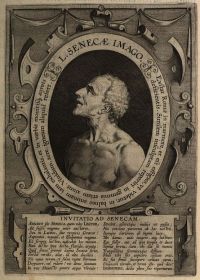 Lucius Annaeus Seneca,
L. Annaeus Seneca on Benefits
Lucius Annaeus Seneca,
L. Annaeus Seneca on Benefits
“ You have nothing to do with the definition of benefits, or with the question whether so great and noble a name ought to be degraded by applying it to such vulgar and mean matters as these, nor do we seek for truth that we may use it to the disadvantage of others; do you adjust your minds to the semblance of truth, and while you are learning what is really honourable, respect everything to which the name of honour is applied. ”
Hugh Binning, The Works of the Rev. Hugh Binning
“ Again, many others apprehend some greatness and eminency in honour and respect among men; others in pleasure and satisfaction to their senses, even as a beast would judge. Others apprehend some worth and excellence in great possessions, in silver and gold beside them, and have a kind of complacency in these. But if once this kingdom of God entered into your heart, if ye saw the worth of it, the vast dimensions of it, the pleasure, honour, and profit of it, then certainly all other things would appear to be mean and low, not worth a thought beforehand. ”
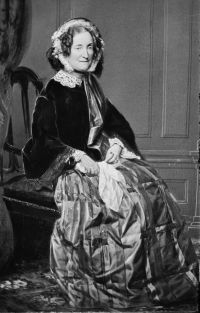 Lydia Sigourney,
Poems for the Sea
(1850)
Lydia Sigourney,
Poems for the Sea
(1850)
“ That your good conduct is our wealth, Your stainless name, our pride. Be firm and honest, kind and true, In sunshine, or in blast, And make your duty, your delight, Where'er your lot is cast. ”
George Hay, Works of the Right Rev. Bishop Hay of Edinburgh… (1871)
“ It gives a dignity, value, and merit to all our good works, which makes them most acceptable in the sight of God, and worthy of an ample reward from Him, both of an increase of grace in this life and of eternal glory in the life to come. ”
Joseph Warschauer, Problems of Immanence: studies critical and constructive
“ But the Christian religion, by insisting on the infinite value of each human soul, and by asserting the greatness of its destiny, supplied an immense incentive to the attainment by each of the highest within reach. The doctrine of the worth of man is, to all who accept it, a powerful stimulus in the struggle to a fuller and deeper life. ”
Henry James, Notes on Novelists, with Some Other Notes
“ We see then how, when social character and evolved type are the prize to be grasped, the facts of observation and certification, unrestingly social and historic too, that form and fondle and retouch it, never relaxing their action, are so easily and blessedly absolute to him that this is what we mean by their virtue. ”
Mrs. Hubback, The old vicarage (1856)
“ Our standard of worth is regulated, I suppose, by our favorite possessions, and the minds which value affection and truth the most, will often esteem services springing from these motives far beyond their intrinsic merit. ”
 Francis Xavier Lasance,
The young man's guide
(1910)
Francis Xavier Lasance,
The young man's guide
(1910)
“ Riches vanish, honors evaporate, pleasures slip away - virtue, valuable in itself, recognized by God, fostered by the noblest and best of men - an object of envy, even to the wicked - virtue remains, reaches even beyond the grave - crowns, and is crowned - reigns in, and for, all eternity! ”
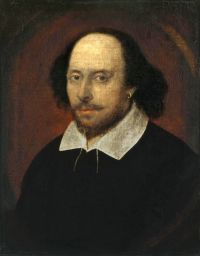 William Shakespeare,
King Lear
(1917)
William Shakespeare,
King Lear
(1917)
“ Where nature doth with merit challenge. 'Where inherent goodness vies with moral growth,' i.e., virtue developed by training. If, on the other hand, challenge means demand, then with merit would be an adverbial phrase qualifying challenge, and the whole expression would mean 'Where inherent goodness deservedly demands our largest bounty.' I prefer the former interpretation. ”
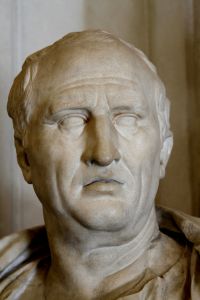 Marcus Tullius Cicero,
The Orations of Marcus Tullius Cicero…
Marcus Tullius Cicero,
The Orations of Marcus Tullius Cicero…
“ But if any one wishes to consider them in a more separate manner, he may divide them into the intention, and the person of the doer, and extraneous circumstances. The virtue of the mind is that concerning the parts of which we have lately spoken; the virtues of the body are health, dignity, strength, swiftness. Extraneous circumstances are honour, money, relationship, family, friends, country, power, and other things which are understood to be of a similar kind. ”
 Agnes Repplier,
Points of friction
(1920)
Agnes Repplier,
Points of friction
(1920)
“ Great waves of religious thought, great struggles for principles and freedom, great births of national life, great discoveries, great passions, and great wrongs,—these things have swayed the world, wrecking and saving the souls of men without regard for money. Great qualities, too, have left their impress upon the human race, and endowed it for all the years to come. ”
 Hilaire Belloc,
A Moral Alphabet — K for Klondyke
Hilaire Belloc,
A Moral Alphabet — K for Klondyke
“ Not infrequently nuggets of value are found.They bring us the gold when their labours are ended,And we—after thanking them prettily—spend it. MORAL: Just you work for Humanity, never you mindIf Humanity seems to have left you behind. ”

