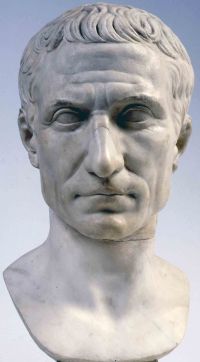
Julius Caesar

Julius Caesar

Summary

Portrait of Julius Caesar Julius Caesar,  The Alexandrian War (1859)

“ Nor was there at Alexandria a single Roman or citizen who remained engaged in the attack or defense, but mounted the tops of the houses and all the eminences that would give a view of the fight, addressing the gods by vows and prayers for victory. (Latin)
16 The event of the battle was by no means equal; a defeat would have deprived us of all resources either by land or sea; and even if we were victorious, the future would be uncertain. The Alexandrians, on the contrary, by a victory gained every thing; and if defeated, might yet again have recourse to fortune.
”
Source: Wikisource

Portrait of Julius Caesar Julius Caesar,  The Alexandrian War (1859)

“ Domitius, who was not only sensible of the necessity of money to defray the expenses of the war, but likewise thought it dishonorable to the people of Rome and the victorious Caesar, as well as infamous to himself, to suffer the dominions of allies and friends to be usurped by a foreign prince, sent embassadors to Pharnaces, to acquaint him, "That he must withdraw immediately from Armenia and Cappadocia, and no longer insult the majesty and right of the Roman people, while engaged in a civil war." ”
Source: Wikisource

Portrait of Julius Caesar Julius Caesar,  The Alexandrian War (1859)

“ The suddenness of the thing occasioned some terror at first; and our ranks not being yet formed, the scythed chariots disordered and confused the soldiers: however, the multitude of darts discharged against them, soon put a stop to their career. The enemy's army followed them close, and began the battle with a shout. Our advantageous situation, but especially the assistance of the gods, who preside over all the events of war, and more particularly those where human conduct can be of no service, favored us greatly on this occasion. ”
Source: Wikisource

Get perspective with Kwize: daily news enlightened by great literature