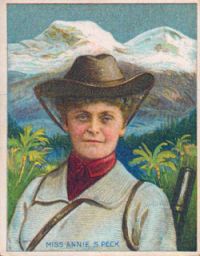
“ To the north, beyond the brown Guadalquivir, lay the distance-blue foothills of the Sierra Morena, dying away in the northern horizon.It was twenty-one o'clock by her station timepiece when I descended at Córdoba from the train I had boarded in the dusk at Tocina. A mile's stroll brought me to the city itself, and a lodging. Poor old Córdoba has fallen on parlous times. Like those scions of nobility one runs across now and then "on the road," it is well that she has her papers to prove she was once what she claims to have been. ”
Córdoba
Definition and stakes
Córdoba Province, Argentina’s second-most populous region, occupies central Argentina’s heartland, distinguished by its historic capital, cultural legacy, and varied geography. From the Jesuit-founded University of Córdoba to the dramatic Sierras and the salt flats of Mar Chiquita, the province embodies contrasts.
Authors like Waldo David Frank evoke its “magic” and “tacit fervors,” while Frances Minto Dickinson Elliot highlights its scenic beauty and historical depth. Harry Alverson Franck notes its colonial atmosphere, preserving traditions often overshadowed by modernity. These perspectives collectively underscore Córdoba’s role as a crossroads of heritage, resilience, and natural splendor, reflecting its enduring significance in Argentine identity.
Quotes about “Córdoba”
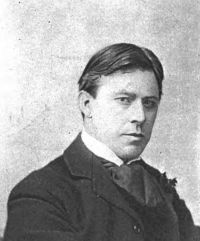
Waldo David Frank,
Virgin Spain
(1926)
“ The people are dark and silent like the dusk. The sky is pale with a glow of convalescence. The houses, serried in the curving streets, are hot. The evening has a magic, it throbs and swells with tacit fervors. The whole of Córdoba is quick under the glow of night. The stone streets are flesh, willfully rigid, of a spirit possessed with the desire to dance. And in the dance are darker intimations: cries, ravage, conquest. But the slow streams of men and women are the sole expression. ”
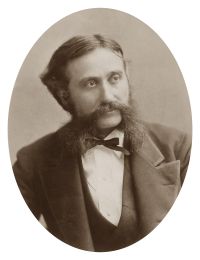
Frances Minto Dickinson Elliot, Old Court Life in Spain, vol. 1…
“ At all times Cordoba is beautiful; the verdant slopes of the Sierra Morena, rising precipitously from the very gates, look down serenely on the strife of rival peoples; lovely retreats, dotted with white quintas, farms, mills, vineyards, and olive-grounds; the rugged summits rising westwards to the limits of Lusitania; the lazy Guadalquivir flowing at their base, through grassy plains dark with orange and myrtle. ”
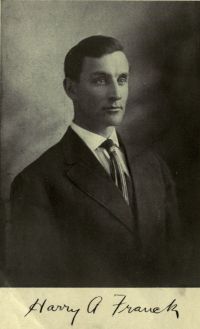
Harry Alverson Franck,
Working North from Patagonia
“ Córdoba, the geographical center of the Argentine Republic, is centuries old, with more traditions, more respect for age, than Buenos Aires, with many reminders of old Spain and of the conservative, time-marked towns of the Andes. In Córdoba it is easy to imagine the atmosphere of the federal capital of a century ago. There is still a considerable “colonial” atmosphere; respect for old customs still survives; age counts, which is rare in the Argentine, a country like our own full of youth and confidence in the future, and the corresponding impatience with the past, with precedent. ”
Frances Minto Dickinson Elliot, Old Court Life in Spain, vol. 1…
“ Under the protection of its river-girt walls the flying Goths draw breath. From Cordoba the king has started his great army, spreading like waves over the Andalusian plains. To Cordoba, Pelistes and a few terrified fugitives return, bringing tidings of the catastrophe.The men of Cordoba crowd round them with terror in their looks. Pelistes shakes his aged head, tears gather in his eyes.“Roderich is fallen,” they cry. “Your silence reveals it. Be to us a king, O Pelistes, and defend us from the Moors.” ”
“ Thus it was that, though I planned to reach Córdoba that evening, I left Seville during the morning of July 8 on foot. In my knapsack was a day's supply of both food and drink, in the form of three-cent's worth of those fresh figs that abound in Spain--the one fruit that is certainly descended directly from the Garden of Eden. For miles the route led across a desert-dry land as flat as a western prairie, grilling in the blazing sunshine. At rare intervals an olive-tree cast a dense black shadow. ”
J. A. Hammerton, The real Argentine: Notes and Impressions of a Year in the Argentine and Uruguay
“ Here we find ourselves in a city that has caught but little of the new spirit of the Argentine and rather prides itself on being the shrine of the ancient spirit. For the first time, too, we can witness something resembling scenery, as the country in the neighbourhood of Córdoba, tired of being flat and uninteresting for so many hundred miles, begins to take on some picturesque inequalities, and at no great distance beyond the antique city, the Hills of Córdoba, wooded and picturesque, come gratefully to the eye. ”
C. Rochfort Scott, Excursions in the mountains of Ronda and Granada…
“ On reaching some high table land, about five miles from Cordoba, the glorious capital of the western caliphs, and the splendid valley of the Guadalquiver, first burst upon the sight. The view is less extensive, perhaps, but far more striking than that on approaching Granada from Alhama; and when arrived at the edge of the range of hills bordering the rich valley, it becomes perfectly enchanting. The bright city, with its venerable cathedral, its Moorish bridge, its castle and royal palace, is offered to the spectator’s close inspection. ”
C. Rochfort Scott, Excursions in the mountains of Ronda and Granada…
“ The kingdom of Cordoba, in its diminished and enfeebled state, continued to exist until A.D. 1236, when its proud capital fell an easy conquest to Ferdinand III. of Castile, who, to merit the saintly title which Spanish history has conferred upon him, drove the turbaned inhabitants from their homes, and rendered the beautiful city a wilderness of brick and mortar. ”
Henry Stephens, Journeys and Experiences in Argentina…
“ The inhabitants of the Province of Córdoba talk in a sing song manner and are known by their fashion of articulation in any part of the republic they may chance to find themselves in. It is a ten hours' ride on the accommodation train from Córdoba to Rosario, although the express trains which run by night only shorten the time by a couple of hours. The country is a dry but productive plain, and is fairly thickly settled; every few miles there is a town. These range from a few hundred to a few thousand inhabitants. ”
Nellie Bly,
Six Months in Mexico
“ The pretty little town of Cordoba lies about two miles from the station, and street cars, hauled by four mules, await each train and carry the passengers to the village—first-class, twelve and a half cents; the cars wind through little streets shaded on either side by beautiful foliage, which, every here and there, gives the tourist tantalizing glimpses of the exquisite tropical gardens within; the street car passes the only hotel in the town—the Diligencia. It is a low, one-story structure, and looks more like a cattle-yard than a habitation for human beings ”
Henry Stephens, Journeys and Experiences in Argentina…
“ Córdoba is nicknamed "Rome of Argentina" on account of its numerous churches, convents, monasteries, other religious institutions, and multitude of priests. There are several thousand of the latter body of men; they and the soldiers are not reckoned in the national census of urban population for they are constantly moving from place to place. ”
Aubrey F. G. Bell, The Magic of Spain
“ From Montoro one may follow the Guadalquivir, now a majestic river, through its olive groves to the famous bridge of Alcolea, and the low white line beneath bare hills and wooded mountains which is Córdoba, seen from the East. Everywhere on the roads and in the inns of Andalucía the peasants are courteous, pleasant, intelligent, picturesque; always ready to give any service in their power, often immensely ignorant. They will ask if “Ingalaterra” is not Spain’s border-country and confuse it with Gibraltar, or if the Queen was a Christian before her marriage. ”
J. A. Hammerton, The real Argentine: Notes and Impressions of a Year in the Argentine and Uruguay
“ This is very characteristic of Córdoba, whose university (founded in 1605 by the Bishop of Tucumán, and sharing with that of Lima the distinction of being the oldest in South America) has done so much to maintain the spirit of times past, at the very threshold of the most insistent modernity. Little though I admire the Roman Catholic Church as I find it in South America, it seems to me that the Argentine is the better for its Córdoba. ”
Waldo David Frank,
Virgin Spain
(1926)
“ Seneca the Stoic, Averroës the Commentator, Moses ben Maimun first rationalist of the Jews, Lucan, and Spain’s greatest lyric poet, Luis de Góngora ... such are the light of Córdoba. It is the home of the most perfect Arab Knight, the quiet Al-Mansor who, ruling Spain, decreed Sunday to be a day of rest in deference to the Christians.Córdoba lies within tumultuous mountains and a lazy river. It is a poise of mountains and river. It is a kingly city within chaos; it is masculine in a feminine land. The Christian Copts brought their woman worship to Seville ”
Waldo David Frank,
Virgin Spain
(1926)
“ If these be puritans, these men and women, with their heritage of war, privation, pioneering—they whose ancestry is Islam, the Cross, the promised Zion—long since has the hard fruit ripened. They are firm and condignly whole within their city whose maze of streets is whole within the mountains....This evening, Córdoba, released from day, is going to the Bull-Ring. There is no moon; the bowl of the arena holds a winey night in which the stars are bubbles of effervescence. The seat tiers are deep. Men and women clamber noisily from perch to perch. ”
Henry Stephens, Journeys and Experiences in Argentina…
“ The soil of the country is poor and rocky, while the rainfall is slight. In the year 1915, seven months elapsed without a drop falling. The city is situated to the west of the productive part of the province, and from it westward to San Juan at the foot of the Andes, the country is the poorest in the republic. Yet Córdoba has had a rapid growth recently. In the manufacturing line, it has three breweries, that of Pollak and Brueck, generally called the Córdoba Brewery ”
Hubert Howe Bancroft,
History of Mexico
(1882)
“ Everywhere they beheld the same evidences of high culture seen by Córdoba, the tower-temples and crosses of the Mayas rising from gracefully outlined promontories, and glistening white from behind legended hills, leading them every moment to anticipate the discovery of some magnificent city, such as in our day has been revealed to an admiring posterity; for while the East buries her ancient cities in dust, the West none the less effectually hides hers in foliage. ”
Thomas A. Janvier,
Legends of the City of Mexico
“ It is well known, Señor, that this Mulata of Córdoba, being a very beautiful woman, was in close touch with the devil. She dwelt in Córdoba—the town not far from Vera Cruz, where coffee and very good mangos are grown—and she was born so long ago that the very oldest man now living was not then alive. ”
John Foster Fraser,
The Amazing Argentine: A New Land of Enterprise
“ But as living beneath the sun brings early old age to men and women, so cities which have had a few centuries of constant sun glare get a drowsy mediævalism which sister cities in more temperate climes must have long ages to acquire. The aroma of the Church and of scholasticism permeates Cordoba. In many respects it is quite modern, with its big new hotel, where the band plays in the restaurant whilst you are dining, and its streets lit with electricity and electric tramcars jangling their way through the squares and plenty of taxi-cabs on the ranks. ”
Gordon Ross, Argentina and Uruguay
“ The City of Córdoba is not only the traditional seat of learning par excellence of the Republic, it is also, as a consequence of old-time associations no doubt, its chief centre of clerical influence. ”
John Foster Fraser,
The Amazing Argentine: A New Land of Enterprise
“ Because it is the oldest city in Argentina and has inhabitants with pedigrees, and because of the society attracted to it, Cordoba regards itself as the aristocratic centre of the Republic. In the neighbouring hills are sanatoria, like Jesu Maria, much favoured by the people of the plains who need a change. ”
C. Rochfort Scott, Excursions in the mountains of Ronda and Granada…
“ Some of the old buildings, in the narrow Moorish streets, possess the same kind, of sketchy beauty; but the houses of the other parts of the city seldom exceed two stories in height, from which circumstance Cordoba is, perhaps, the most sultry place in Andalusia.The inhabitants are a diminutive race, and the most ill-looking I have seen in Spain. ”
Walter Crum Watson, Portuguese Architecture
“ Toledo indeed fell in 1085, but Cordoba and Seville were only taken a few years before the capture of the Algarve, and Granada was able to hold out till 1492. Besides, in what is now Portugal there had been no great capital like Cordoba. And yet, though this is so, hardly a town or a village exists in which some slight trace of their art cannot be found, even if it be but a tile-lining to the walls of church or house. ”
1911 Encyclopædia Britannica, Volume 7… (1911)
“ This dam also serves to irrigate the valley below, and to furnish power for the electric plant which provides Córdoba with light and electric power. In and about the city there are several industrial establishments which have sprung into existence since the opening of the first railway in 1870. The surrounding country is irrigated and well cultivated, and produces an abundance of fruit and vegetables. ”
1911 Encyclopædia Britannica, Volume 7… (1911)
“ The N.W. part of the province is traversed by an isolated mountain system made up of the Córdoba, Pocho and Ischilin sierras, which extend for a distance of some 200 m. in a N. and S. direction. These ranges intercept the moist winds from the Atlantic, and receive on their eastern slopes an abundant rainfall, which gives them a strikingly verdant appearance in comparison with the surrounding plains. West and N.W. of the sierras are extensive saline basins called Las Salinas Grandes, which extend into the neighbouring provinces and are absolutely barren. In the N.E. the land is low and swampy ”
Waldo David Frank,
Virgin Spain
(1926)
“ The summer night is cool as wisdom; it is a poise against day like that of Seneca the Stoic against the fever of life. When the sun falls behind the roofs, the town opens as northern towns with the dawn. Day indeed is often fiery night on Córdoba. The good folk have gone to bed ”
Henry Stephens, Journeys and Experiences in Argentina…
“ Córdoba, Tucumán, and Salta are especially rich in the appearance of their churches, Tucumán taking the lead in the ornateness of the tiles. In Córdoba are the large churches of Merced, Jesuit Fathers, and Santo Domingo, but by far the largest and finest church in all Argentina is the cathedral, three centuries old, its architecture being that of the current Spanish style that was in vogue at the time it was built. ”
Henry Stephens, Journeys and Experiences in Argentina…
“ The churches, cloisters, convents, and religious institutions of the city are innumerable, and it is estimated that over six thousand of its inhabitants are connected with the religious orders and organizations. Córdoba is one of the cleanest cities in America, and it is difficult to find a place where civic pride, park system, cleanliness of house exteriors, public buildings, pavement, hotels, cafés, department stores, banks, residences, religious edifices, and water supply taken as a whole can equal that of it. ”
Various, Encyclopaedia Britannica, 11th Edition…
“ The surrounding district produces sugar, tobacco and coffee, Córdoba being one of the principal coffee-producing centres of Mexico. It also manufactures cotton and woollen fabrics. The town is regularly laid out and built of stone, and contains several handsome edifices, chief of which is the old cathedral. Córdoba was a town of considerable importance in colonial times, but fell into decay after the revolution. The railway from Vera Cruz to Mexico, which passes through it, and the development of coffee production, have helped the city to recover a part of its lost trade. ”
Nevin O. Winter, Mexico and Her People of To-day
“ Between Orizaba and Cordoba, a distance of sixteen miles, is perhaps the best cultivated section in Mexico. The products of all the zones are mingled and corn and coffee grow side by side as well as peach trees and the banana. Cordoba is just on the border of the tierra caliente, or hot country proper, and is a much smaller city than Orizaba. It is a very old town and was founded as a place of refuge from the malarial fevers of the coast lands. ”
Hubert Howe Bancroft,
History of Mexico, Volume 1, 1516-1521
(1883)
“ Las Casas, Hist. Ind., iv. 350, confounds Córdoba’s and Grijalva’s voyages in this respect, that brings the former at once to Cozumel, when, as a matter of fact, Córdoba never saw that island. [9] So called by the natives, but by the Spaniards named San Lázaro, because ‘it was a Domingo de Lazaro’ when they landed. Yet Ribero writes chãpa, while Vaz Dourado employs llazaro, and Hood, Campechy; Laet gives the name correctly; Ogilby and Jefferys call the place S. Frco de Campeche. ‘Los Indios le deziã Quimpech.’ Herrera, dec. ii. lib. ii. cap. xvii. ”
Pierre Denis, The Argentine Republic: Its Development and Progress
“ As early as the middle of the seventeenth century Córdoba seems to have exported to Peru as many as 28,000 to 30,000 mules annually.25 At the close of the eighteenth century, we read in D'Azara, 60,000 mules were exported; and Helms gives the same figure.26 The mules were bought young by Córdoba dealers at Buenos Aires, Santa Fé, and Corrientes, reared at Córdoba, and then sent to Salta, where they were sold in their third year to mule-dealers from Peru. ”