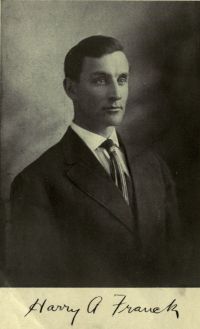
Harry Alverson Franck

Harry Alverson Franck

Summary

Portrait of Harry Alverson Franck Harry Alverson Franck Working North from Patagonia

It is illegal to cut down a tree within the limits of Rio, and the forest makes the most of its immunity by crowding the heels of the human creatures who soft-heartedly spare it; trees, shrubs, bushes, lianas, creepers, a veritable tidal wave of forest and jungle sweeps from the edge of the sea to the summits of the encircling hills, like multitudes gone to demand of the sun the renewal of their strength and energy.
Source: Gutenberg

Portrait of Harry Alverson Franck Harry Alverson Franck Working North from Patagonia

Outside each uninspiring town was an ostentatious city of the dead; in the sodden fields were flocks of sheep, cattle, and horses, fat as barrels, some snorting away at sight of the train, others gazing disdainfully after it. In many places the pampa was flooded, sometimes for miles, the shallow temporary lakes dotted with wild ducks, the roads mere rivers of mud, with only the tops of the fence-posts out of water, in which dismal looking animals were huddled up to their bellies, or crowded together on little muddy islands.
Source: Gutenberg

Portrait of Harry Alverson Franck Harry Alverson Franck Working North from Patagonia

Yet sometimes it is hard to blame the negro if he just lies in the shade and a soft breeze and gazes away at the beautiful bay, indigo-blue by day, shimmering with moonlight by night, ever fresh with the breezes that lightly ruffle its ocean-like bosom, as if he were making up for the loafing denied his enslaved fathers. After all, if Nature wished man to exert himself, why does it produce such perfect weather and cause bananas and jack-fruit to grow of themselves?
Source: Gutenberg

Get perspective with Kwize: daily news enlightened by great literature