Summary

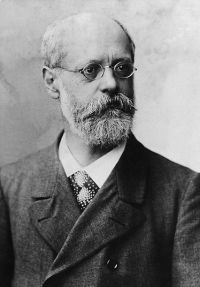
Portrait of Karl Kautsky Karl Kautsky Georgia: A Social-Democratic Peasant Republic… (1921)

If the dryness necessitates great irrigation works, in order to increase the fertility of the country, malaria, on the other hand, is best grappled with by draining the swamps which occupy wide, stretches of land, especially about the Black Sea. The overcoming of malaria would not merely raise the labour power of the inhabitants, but would also rescue new land for cultivation. Both irrigation and draining works were equally neglected by the Russian Government.
Source: Wikisource

Portrait of Karl Kautsky Karl Kautsky Georgia: A Social-Democratic Peasant Republic… (1921)

Grass is then allowed to grow, and the soil is used as pasture, again for several years in succession, when it is sown once more with crops.
The cattle which is put on the pastures is small and insignificant, at least the horned cattle. The absence of the cultivation of fodder is not only prejudicial to the raising of cattle and to agriculture, but also to afforestation. The sheep and goats ruin the woods, and destroy every aftergrowth of trees, especially in the eastern and dry regions. We have spoken above of the boundless riches of Georgia in wood, but these are very unevenly distributed.
Source: Wikisource

Portrait of Karl Kautsky Karl Kautsky Georgia: A Social-Democratic Peasant Republic… (1921)

If not for the cultivation of wheat, the Russian Government has done much to promote the culture of the vine in Georgia, and, in addition, has aided the production of tea. The vine, tea, olives, and almonds are in, many parts carefully cultivated. The remarks upon the backwardness of agriculture do not apply to these crops. Nevertheless, owing to the primitive character of its agriculture, an agrarian country like Georgia was not a little dependent upon a foreign market for its sustenance.
War and revolution would, therefore, menace the country in the extreme.
Source: Wikisource

Get perspective with Kwize: daily news enlightened by great literature