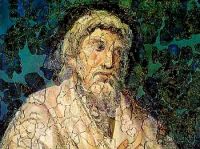
 Lactantius,
Ante-Nicene Fathers Vol. VII, The Divine Institutes…
(1885)
Lactantius,
Ante-Nicene Fathers Vol. VII, The Divine Institutes…
(1885)
“ For although he perceived the truth respecting the immortality of the soul, yet he did not speak respecting it as though it were the chief good. We, therefore, are able to elicit the truth by more certain signs; for we have not collected it by doubtful surmise, [1] but have known it by divine instruction. Now Plato thus reasoned, that whatever has perception by itself, and always moves, is immortal; for that that which has no beginning of motion is not about to have an end, because it cannot be deserted by itself. ”
