Summary

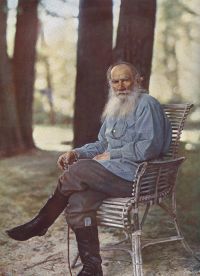
Portrait of Leo Tolstoy Leo Tolstoy A Confession (Maude's translation… (1882)

Life is a senseless evil, that is certain, said I to myself. Yet I have lived and am still living, and all mankind lived and lives. How is that? Why does it live, when it is possible not to live? Is it that only I and Schopenhauer are wise enough to understand the senselessness and evil of life?
The reasoning showing the vanity of life is not so difficult, and has long been familiar to the very simplest folk; yet they have lived and still live. How is it they all live and never think of doubting the reasonableness of life?
Source: Wikisource

Portrait of Leo Tolstoy Leo Tolstoy A Confession (Maude's translation… (1882)

Indeed, what are we who are convinced of the necessity of suicide yet do not decide to commit it, but the weakest, most inconsistent, and to put it plainly, the stupidest of men, fussing about with our own stupidity as a fool fusses about with a painted hussy? For our wisdom, however indubitable it may be, has not given us the knowledge of the meaning of our life.
Source: Wikisource

Portrait of Leo Tolstoy Leo Tolstoy A Confession (Maude's translation… (1882)

I, my reason, have acknowledged that life is senseless. If there is nothing higher than reason (and there is not: nothing can prove that there is) , then reason is the creator of life for me. If reason did not exist there would be for me no life. How can reason deny life when it is the creator of life? Or to put it the other way: were there no life, my reason would not exist; therefore reason is life's son. Life is all. Reason is its fruit yet reason rejects life itself!
Source: Wikisource

Get perspective with Kwize: daily news enlightened by great literature