Summary

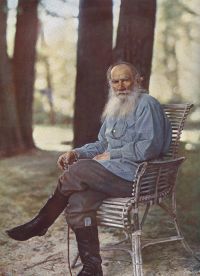
Portrait of Leo Tolstoy Leo Tolstoy A Confession (Maude's translation… (1882)

No sweetness of honey could be sweet to me when I saw the dragon and saw the mice gnawing away my support.
Nor was that all. Had I simply understood that life had no meaning I could have borne it quietly, knowing that that was my lot. But I could not satisfy myself with that. Had I been like a man living in a wood from which he knows there is no exit, I could have lived; but I was like one lost in a wood who, horrified at having lost his way, rushes about wishing to find the road. He knows that each step he takes confuses him more and more, but still he cannot help rushing about.
Source: Wikisource

Portrait of Leo Tolstoy Leo Tolstoy A Confession (Maude's translation… (1882)

As long as I was not living my own life but was borne on the waves of some other life—as long as I believed that life had a meaning, though one I could not express—the reflection of life in poetry and art of all kinds afforded me pleasure: it was pleasant to look at life in the mirror of art. But when I began to seek the meaning of life and felt the necessity of living my own life, that mirror became for me unnecessary, superfluous, ridiculous, or painful.
Source: Wikisource

Portrait of Leo Tolstoy Leo Tolstoy A Confession (Maude's translation… (1882)

I cannot say I wished to kill myself. The power which drew me away from life was stronger, fuller, and more widespread than any mere wish. It was a force similar to the former striving to live, only in a contrary direction. All my strength drew me away from life. The thought of self-destruction now came to me as naturally as thoughts of how to improve my life had come formerly.
Source: Wikisource

Get perspective with Kwize: daily news enlightened by great literature