Summary

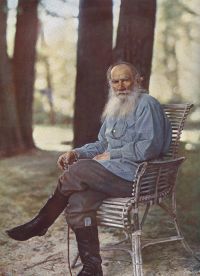
Portrait of Leo Tolstoy Leo Tolstoy A Confession (Maude's translation… (1882)

One kind of knowledge did not reply to life's question, the other kind replied directly confirming my despair, indicating not that the result at which I had arrived was the fruit of error or of a diseased state of my mind, but on the contrary that I had thought correctly, and that my thoughts coincided with the conclusions of the most powerful of human minds.
It is no good deceiving oneself. It is all—vanity! Happy is he who has not been born: death is better than life, and one must free oneself from life.
Source: Wikisource

Portrait of Leo Tolstoy Leo Tolstoy A Confession (Maude's translation… (1882)

And so what remains after the complete annihilation of the will, for us who are so full of the will, is, of course, nothing; but on the other hand, for those in whom the will has turned and renounced itself, this so real world of ours with all its suns and milky way is nothing.'
'Vanity of vanities', says Solomon—'vanity of vanities—all is vanity. What profit hath a man of all his labour which he taketh under the sun? One generation passeth away, and another generation cometh: but the earth abideth for ever.
Source: Wikisource

Portrait of Leo Tolstoy Leo Tolstoy A Confession (Maude's translation… (1882)

So I wandered in that wood of human knowledge, amid the gleams of mathematical and experimental science which showed me clear horizons but in a direction where there could be no home, and also amid the darkness of the abstract sciences where I was immersed in deeper gloom the further I went, and where I finally convinced myself that there was, and could be, no exit.
Source: Wikisource

Get perspective with Kwize: daily news enlightened by great literature