Summary

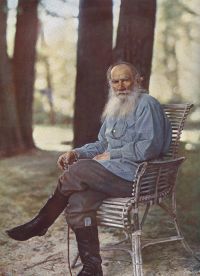
Portrait of Leo Tolstoy Leo Tolstoy A Confession (Maude's translation… (1882)

I came to love good people, hated myself, and confessed the truth. Now all became clear to me.
What if an executioner passing his whole life in torturing people and cutting off their heads, or a hopeless drunkard, or a madman settled for life in a dark room which he has fouled and imagines that he would perish if he left—what if he asked himself: 'What is life?' Evidently he could get no other reply to that question than that life is the greatest evil, and the madman's answer would be perfectly correct, but only as applied to himself. What if I am such a madman?
Source: Wikisource

Portrait of Leo Tolstoy Leo Tolstoy A Confession (Maude's translation… (1882)

A goat, a hare, and a wolf are so made that they must feed themselves, and must breed and feed their family, and when they do so I feel firmly assured that they are happy and that their life is a reasonable one. Then what should a man do? He too should produce his living as the animals do, but with this difference, that he will perish if he does it alone; he must obtain it not for himself but for all. And when he does that, I have a firm assurance that he is happy and that his life is reasonable. But what had I done during the whole thirty years of my responsible life?
Source: Wikisource

Portrait of Leo Tolstoy Leo Tolstoy A Confession (Maude's translation… (1882)

For everyone that doeth ill hateth the light, and cometh not to the light, lest his works should be reproved.' I perceived that to understand the meaning of life it is necessary first that life should not be meaningless and evil, then we can apply reason to explain it. I understood why I had so long wandered round so evident a truth, and that if one is to think and speak of the life of mankind, one must think and speak of that life and not of the life of some of life's parasites.
Source: Wikisource

Get perspective with Kwize: daily news enlightened by great literature