Summary

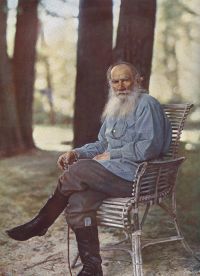
Portrait of Leo Tolstoy Leo Tolstoy A Confession (Maude's translation… (1882)

Naturally for a faith to be able to reply to the questions of a king dying in luxury, of an old slave tormented by overwork, of an unreasoning child, of a wise old man, of a half-witted old woman, of a young and happy wife, of a youth tormented by passions, of all people in the most varied conditions of life and education—if there is one reply to the one eternal question of life: 'Why do I live and what will result from my life?'—the reply, though one in its essence, must be endlessly varied in its presentation
Source: Wikisource

Portrait of Leo Tolstoy Leo Tolstoy A Confession (Maude's translation… (1882)

As my body has descended to me from God, so also has my reason and my understanding of life, and consequently the various stages of the development of that understanding of life cannot be false. All that people sincerely believe in must be true; it may be differently expressed but it cannot be a lie, and therefore if it presents itself to me as a lie, that only means that I have not understood it. Furthermore I said to myself, the essence of every faith consists in its giving life a meaning which death does not destroy.
Source: Wikisource

Portrait of Leo Tolstoy Leo Tolstoy A Confession (Maude's translation… (1882)

XIII I TURNED from the life of our circle, acknowledging that ours is not life but a simulation of life—that the conditions of superfluity in which we live deprive us of the possibility of understanding life, and that in order to understand life I must understand not an exceptional life such as ours who are parasites on life, but the life of the simple labouring folk—those who make life—and the meaning which they attribute to it. The simplest labouring people around me were the Russian people, and I turned to them and to the meaning of life which they give.
Source: Wikisource

Get perspective with Kwize: daily news enlightened by great literature