Summary

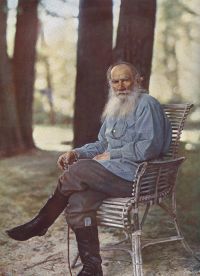
Portrait of Leo Tolstoy Leo Tolstoy A Confession (Maude's translation… (1882)

And I saw that all who do not profess an identical faith with themselves are considered by the Orthodox to be heretics, just as the Catholics and others consider the Orthodox to be heretics. And I saw that the Orthodox (though they try to hide this) regard with hostility all who do not express their faith by the same external symbols and words as themselves; and this is naturally so: first, because the assertion that you are in falsehood and I am in truth, is the most cruel thing one man can say to another;
Source: Wikisource

Portrait of Leo Tolstoy Leo Tolstoy A Confession (Maude's translation… (1882)

If of two religions each considers itself true and the other false, then men desiring to attract others to the truth will preach their own doctrine. And if a false teaching is preached to the inexperienced sons of their Church—which has the truth—then that Church cannot but burn the books and remove the man who is misleading its sons. What is to be done with a sectarian—burning, in the opinion of the Orthodox, with the fire of false doctrine—who in the most important affair of life, in faith, misleads the sons of the Church?
Source: Wikisource

Portrait of Leo Tolstoy Leo Tolstoy A Confession (Maude's translation… (1882)

I said that for every unbeliever turning to a belief (and all our young generation are in a position to do so) the question that presents itself first is, why is truth not in Lutheranism nor in Catholicism, but in Orthodoxy? Educated in the high school he cannot help knowing—what the peasants do not know—that the Protestants and Catholics equally affirm that their faith is the only true one. Historical evidence, twisted by each religion in its own favour, is insufficient.
Source: Wikisource

Get perspective with Kwize: daily news enlightened by great literature