Summary

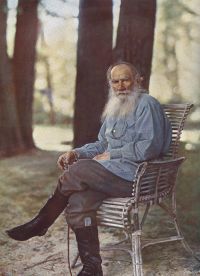
Portrait of Leo Tolstoy Leo Tolstoy,  What I Believe — Chapter 3

“ Christ says, ‘Do not resist evil.’ The sole object of courts of law is – to resist evil. Christ enjoins us to return good for evil. Courts of law return evil for evil. Christ says, ‘Make no distinction between the just and the unjust.’ Courts of law do nothing else. Christ says, ‘Forgive all. Forgive not once, not seven times, but forgive without end.’ ‘Love your enemies.’ ‘Do good to those who hate you.’ Courts of law do not forgive, but they punish; they do not do good, but evil, to those whom they call the enemies of society. ”
Source: Wikisource

Portrait of Leo Tolstoy Leo Tolstoy,  What I Believe — Chapter 3

“ Each man must forgive his brother when he prays, and before bringing his gift. How, then, can a man judge and condemn another when, according to the faith he professes, he is bound to forgive? Thus I see that, according to the doctrine of Christ, a judge who condemns his fellow-creature to death is no Christian.
But perhaps the connection between the words, ‘do not judge, do not condemn,’ and those that follow proves that they do not refer to human courts of law?
”
Source: Wikisource

Portrait of Leo Tolstoy Leo Tolstoy,  What I Believe — Chapter 3

“ At the present time, the military service, which is obligatory on all, and the participation of each, as jurymen, in the courts of law, place this dilemma with striking clarity before all. Each man is called upon to take up an instrument of murder – a gun, a sword – even if he does not kill a fellow-creature; he loads the gun and sharpens the sword, i.e., he is ready to commit murder. Each citizen is called upon to enter the courts of law, to take part in judging and punishing his fellow-creature; i.e., each must renounce the doctrine of Christ that teaches us not to resist evil. ”
Source: Wikisource

Get perspective with Kwize: daily news enlightened by great literature