Summary

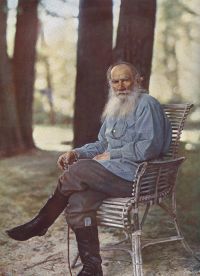
Portrait of Leo Tolstoy Leo Tolstoy What I Believe — Chapter 5

But such an argument would only prove a man to have reached the last stage of madness. And I so dread calling these commandments cruel, that I should rather be inclined to consider a contrary law as wrong, according to plain common sense. You call God cruel because He has enjoined taking an eye for an eye; but I say that many would have had a greater right to call Him cruel, as you do, had He not given this commandment.’
John Chrysostom plainly acknowledges the law of a tooth for a tooth to be the divine law, and the reverse of that law – i.e. Christ’s doctrine of non-resistance – to be wrong.
Source: Wikisource

Portrait of Leo Tolstoy Leo Tolstoy What I Believe — Chapter 5

Perhaps in our days it might happen that the teacher of a new doctrine of life would only destroy our civil laws, our government, and our customs without interfering with the laws that we call divine, though this is hardly probable. But the Hebrews had only one law – a divine law that embraced life in its minutest details. What could a preacher teach them if he began by declaring that the entire law of the people to whom he preached was inviolable?
Source: Wikisource

Portrait of Leo Tolstoy Leo Tolstoy What I Believe — Chapter 5

We have grown so used to the singular interpretation given to us, that the Pharisees and some wicked Hebrews crucified Christ, that the simple question never occurs to us, ‘Where were the true Hebrews, who kept the law and who were neither Pharisees nor wicked men?’ No sooner does the question arise than all grows clear. Christ, be He God or man, brought His doctrine to a people who already had a law that gave them definite rules of life, and which they called the law of God.
Source: Wikisource

Get perspective with Kwize: daily news enlightened by great literature