Summary

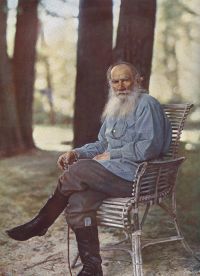
Portrait of Leo Tolstoy Leo Tolstoy What I Believe — Chapter 6

Isn’t it as if Christ, who came to preach peace to all simple-minded men, had, on second thoughts, added the words ‘without a cause’ to show that this precept did not apply to all cases indiscriminately – that anger might sometimes be justifiable? Commentators tell us that anger may be justifiable. ‘But,’ I said to myself, ‘can any man be a fit judge of the reasonableness of his anger? Never yet have I seen an angry man who did not consider himself perfectly just in his anger.
Source: Wikisource

Portrait of Leo Tolstoy Leo Tolstoy What I Believe — Chapter 6

The last words that we repeated in the gospel according to St. Luke say that, as God makes no distinction between men, but pours down His blessings upon all, so should we be like our Father in heaven and make no distinction between men; not acting as the heathen do, but loving all men, and doing good to all. These words were very clear; they seemed to me an explanation and commendation to some clearly defined precept, but what that precept precisely was I could not for a long time make out. ‘Love one’s enemy.’ That was impossible.
Source: Wikisource

Portrait of Leo Tolstoy Leo Tolstoy What I Believe — Chapter 6

In all commentaries we are told that we must try to be at peace with all men; but if that is impossible, on account of the perversity of our adversary, we must be at peace with him in mind, in our thoughts, and then his enmity will be no barrier to our prayer. Moreover, the words that declare that whoever shall say ‘raca,’ or ‘you fool,’ commits a great sin, always seemed most strange and unintelligible to me. If the words forbid abusive language, why are such weak epithets chosen, which can hardly be reckoned terms of abuse?
Source: Wikisource

Get perspective with Kwize: daily news enlightened by great literature