Summary

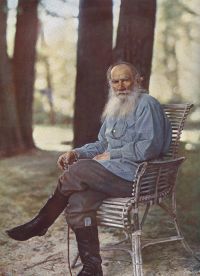
Portrait of Leo Tolstoy Leo Tolstoy What I Believe — Chapter 1

Now I understood that the whole force of the teaching lay in the words ‘do not resist evil,’ and that the entire context was but an application of that great precept. I saw that Christ does not require us to turn the other cheek, and to give away our cloak, in order to make us suffer; but He teaches us not to resist evil, and warns us that doing so may involve personal suffering. Does a father, on seeing his son set out on a long journey, tell him to pass sleepless nights, to eat little, to get wet through, or to freeze?
Source: Wikisource

Portrait of Leo Tolstoy Leo Tolstoy What I Believe — Chapter 1

What perplexed me most of all was that all the evil things that men do, such as condemning private individuals, whole nations, or other religions; and the inevitable results of these condemnations – executions and wars – were justified by the Church. I saw that the doctrine of Christ, which teaches us humility, tolerance, forgiveness, self-denial, and love, was extolled by the Church, but that at the same time she sanctioned what was incompatible with such teachings.
Source: Wikisource

Portrait of Leo Tolstoy Leo Tolstoy What I Believe — Chapter 1

But I soon observed that I should not find in the teaching of the Church the confirmation of my idea that love, humility, meekness, and self-denial were the essential principles of Christianity. I saw that this, which I regarded as the basis of Christianity, did not form the main point in the public teaching of the Church. At first I did not attach much importance to this. ‘The Church,’ I said to myself, ‘acknowledges, besides the doctrine of love, humility, and self-denial, a dogmatic and ritualistic doctrine.
Source: Wikisource

Get perspective with Kwize: daily news enlightened by great literature