Summary

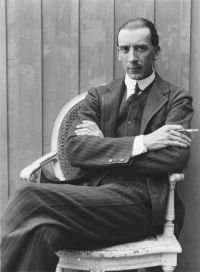
Portrait of Leone Caetani Leone Caetani Uthman and the Recension of the Koran (1915)

The political, moral and financial advantages which the name of Muslim conferred drew the attention of all conquered, so that what during the lifetime of Muhammad and the revolt of the tribes in the Riddah had been considered a burden and a humiliation was magically elevated into an honorable estate, the coveted sign of political power. Islam was changed into a moral and religious emblem which all Arabs became proud to wear. With their public adherence to Islam, the Arabs implicitly affirmed themselves to be masters of that region of Western Asia.
Source: Wikisource

Portrait of Leone Caetani Leone Caetani Uthman and the Recension of the Koran (1915)

When he was gone, the heads of the community were forced to take steps to supply the great lack. We are so accustomed to regard Islam as an institution in itself, powerfully constituted, independent of any personal control like that of a pope, that we are apt to go astray in estimating the earliest period of transition. We do not sufficiently bear in mind that the Islam of Muhammad was a creation of an absolutely personal description, concentrated in and founded almost entirely upon his own individuality, upon his continual, daily, personal support.
Source: Wikisource

Portrait of Leone Caetani Leone Caetani Uthman and the Recension of the Koran (1915)

The steps taken by 'Uthman and his effort to strike boldly at a powerftil class of his subjects in a period of political effervescence strongly tinged with religious passion show up his rule in a new light. He is not the timid man who gives way first to his relations and then to the crowd of malcontents, but the sovereign who, for reasons of his own, issues an injunction and sees that it is completely carried out in the face of a strong agitation.
Source: Wikisource

Get perspective with Kwize: daily news enlightened by great literature