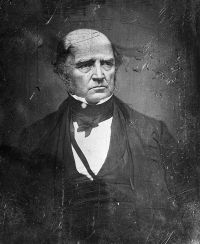
Summary

Portrait of Levi Woodbury Levi Woodbury United States v. Gibbes — Opinion of the Court

A collector is bound to take genuine money or notes rather than counterfeit ones, or the government would be exposed to infinite frauds and losses. The collector, too, need not thus suffer in a case like this, as he is required to keep a register of all treasury-notes received, and from whom taken; and if any prove to be counterfeit, or altered, he has a remedy in his own name, or that of the government, for the amount on the person who paid them in.
Source: Wikisource

Portrait of Levi Woodbury Levi Woodbury United States v. Gibbes — Opinion of the Court

That servant was his own agent, and not the agent of the Treasury Department. He allowed the notes to be lost or stolen before reaching the post-office. His employer must suffer by his neglect or unfaithfulness rather than third persons. The condition of the bond of the collector has, therefore, in this view, never been fulfilled, and prim a facie he is technically liable for its penalty, and is in justice, as well as law, responsible for the amount of the injury thus caused by himself or his own agent.
Source: Wikisource

Portrait of Levi Woodbury Levi Woodbury United States v. Gibbes — Opinion of the Court

It is manifest that, if the notes, though cancelled for security in keeping them till transmitted, were still to be regarded for any purpose as money, the collector must be considered as liable for their amount till paid to the Department, or actually delivered at the post-office, in conformity with the orders of the Department. It would then be a liability on his bond to pay over what money he had received, as that manifestly had not here been done
Source: Wikisource

Get perspective with Kwize: daily news enlightened by great literature