Summary

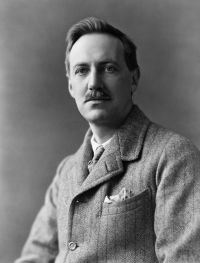
Portrait of Lord Dunsany Lord Dunsany Unhappy Far-Off Things

Bapaume-Arras road. The cheerful green attracted me in the deeps of the desolation as an emerald might in a dust-bin. I entered through that homely garden gate, it had no hinges, no pillars, it lolled on a heap of stone: I came to it from the road; this alone was not battle-field; the road alone was made and tended and kept; all the rest was battle-field, as far as the eye could see. Over a large whitish heap lay a Virginia creeper, turning a dull crimson. And the presence of this creeper mourning there in the waste showed unmistakably that the heap had been a house.
Source: Gutenberg

Portrait of Lord Dunsany Lord Dunsany Unhappy Far-Off Things

The rest is a mound of white stones and pieces of bricks with low, leaning walls surrounding it, and the halves of hollow houses; and eyeing it round a comer, one old tower of the cathedral, as though still gazing over its congregation of houses, a mined, melancholy watcher. Over the bricks lie tracks, but no more streets. It is about the middle of the town, a hawk goes over, calling as though he flew over the waste, and as though the waste were his. The breeze that carries him opens old shutters and flaps them to again. Old, useless hinges moan; wall-paper whispers.
Source: Gutenberg

Portrait of Lord Dunsany Lord Dunsany Unhappy Far-Off Things

I sat down on the railway and looked at one of these houses, for it had clearly been a house. It was at the back of it that most remained, in what must have been a garden. A girder torn up like a pack of cards lay on the leg of a table amongst a brick wall by an apple-tree.
Lower down in the heap was the frame-work of a large four-poster bed; through it all a vine came up quite green and still alive; and at the edge of the heap lay a doll's green pram. Small though the house had been there was evidence in that heap of some prosperity in more than one generation.
Source: Gutenberg

Get perspective with Kwize: daily news enlightened by great literature