Summary

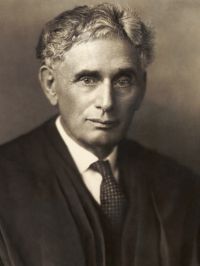
Portrait of Louis Dembitz Brandeis Louis Dembitz Brandeis Pennsylvania Coal Company v. Mahon…

Every restriction upon the use of property imposed in the exercise of the police power deprives the owner of some right theretofore enjoyed, and is, in that sense, an abridgment by the state of rights in property without making compensation. But restriction imposed to protect the public health, safety or morals from dangers threatended is not a taking.
Source: Wikisource

Portrait of Louis Dembitz Brandeis Louis Dembitz Brandeis Pennsylvania Coal Company v. Mahon…

That is, with the value not of the coal alone, but with the value of the whole property. The rights of an owner as against the public are not increased by dividing the interests in his property into surface and subsoil. The sum of the rights in the parts can not be greater than the rights in the whole. The estate of an owner in land is grandiloquently described as extending ab orco usque ad coelum. But I suppose no one would contend that by selling his interest above 100 feet from the surface he could prevent the state from limiting, by the police power, the height of structures in a city.
Source: Wikisource

Portrait of Louis Dembitz Brandeis Louis Dembitz Brandeis Pennsylvania Coal Company v. Mahon…

Furthermore, a restriction, though imposed for a public purpose, will not be lawful, unless the restriction is an appropriate means to the public end. But to keep coal in place is surely an appropriate means of preventing subsidence of the surface; and ordinarily it is the only available means. Restriction upon use does not become inappropriate as a means, merely because it deprives the owner of the only use to which the property can then be profitably put.
Source: Wikisource

Get perspective with Kwize: daily news enlightened by great literature