Summary

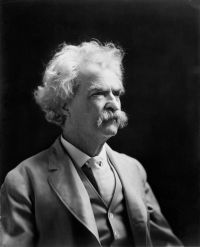
Portrait of Mark Twain Mark Twain Pudd'nhead Wilson — The Ways of the Changelings (1894)

On his deathbed Driscoll set Roxy free and delivered his idolized ostensible son solemnly into the keeping of his brother, the judge, and his wife. Those childless people were glad to get him. Childless people are not difficult to please.
Judge Driscoll had gone privately to his brother, a month before, and bought Chambers. He had heard that Tom had been trying to get his father to sell the boy down the river, and he wanted to prevent the scandal—for public sentiment did not approve of that way of treating family servants for light cause or for no cause.
Source: Wikisource

Portrait of Mark Twain Mark Twain Pudd'nhead Wilson — The Ways of the Changelings (1894)

En he's al'ays callin' me nigger wench, en hussy, en all dem mean names, when I's doin' de very bes' I kin. Oh, Lord, I done so much for him—I lif' him away up to what he is—en dis is what I git for it."
Sometimes when some outrage of peculiar offensiveness stung her to the heart, she would plan schemes of vengeance and revel in the fancied spectacle of his exposure to the world as an imposter and a slave; but in the midst of these joys fear would strike her; she had made him too strong; she could prove nothing, and—heavens, she might get sold down the river for her pains!
Source: Wikisource

Get perspective with Kwize: daily news enlightened by great literature