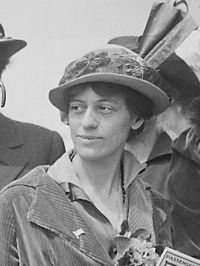
Mary Heaton Vorse

Mary Heaton Vorse

Summary

Portrait of Mary Heaton Vorse Mary Heaton Vorse The Ninth Man (1920)

I was now no more a young philosopher with the keen eyes of Mazzaleone. No longer did I move upon the outside, marveling over the turpitude of men. Now I knew why Gemma had sought her secret and shameful love, and why my lady sat with her black ballot in her hand, and why Simon the usurer had killed himself, for there were times when panic was in my breast and I felt I had best stick my own knife in my breast and not wait for who knows what death at the hands of Mazzaleone. I knew why men and women sat silent and brooding, for I sat that way also.
Source: Wikisource

Portrait of Mary Heaton Vorse Mary Heaton Vorse The Ninth Man (1920)

Then the heralds in the loggia gave tongue:
"Thus saith the most clement of conquerors, Mazzaleone! 'San Moglio shall go free for thirty days' time while he takes his much-needed rest among those who so warmly received him. Thirty days passed, he will depart and take no other toll of blood than this: Each ninth man shall designate secretly whom he wishes put to death in the public place. Thus shall San Moglio judge San Moglio.' "
There was silence. The simple and noble of the town stood as though death had struck them all.
Source: Wikisource

Portrait of Mary Heaton Vorse Mary Heaton Vorse The Ninth Man (1920)

Then as we came to the foot of the garden where the high wall keeps out the river, I saw that the wall was alive with Mazzaleone's men-at-arms, and that behind each cypress stood one of the men of the Conti.
For a moment my lady stood alone by herself, while it seemed that the night waited, panting; the moonlight fell upon her and I marveled that any woman could look as sweet as she, and so happy, when a sea of blood was lapping at her very feet. It seemed strange that anything with so innocent a look could live at the core of so much hate and so much conflicting desire.
Source: Wikisource

Get perspective with Kwize: daily news enlightened by great literature